



Ancient Samosa's Reveal
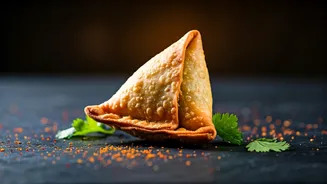
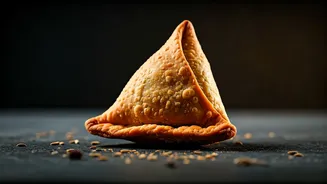
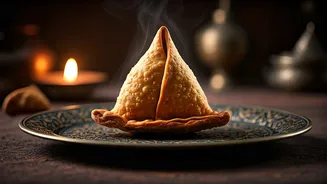
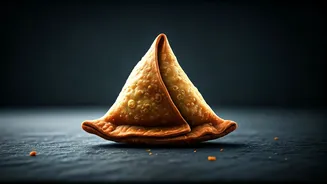
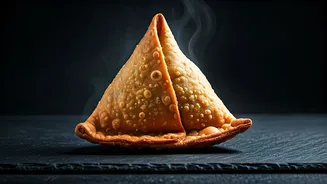
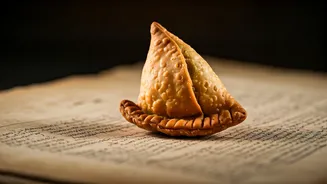
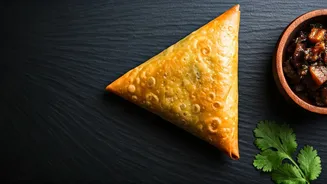
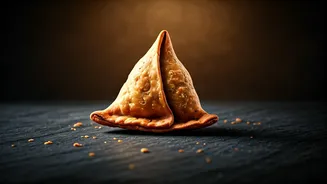
The ubiquitous samosa, a constant presence from bustling street corners to cozy home kitchens, is currently the subject of a fascinating historical debate.
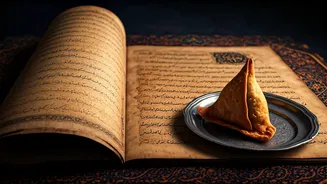
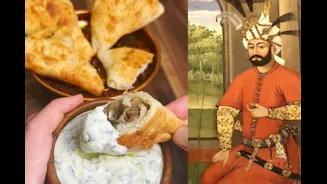
This isn't about flavor or regional variations, but rather a deep dive into the samosa's ancient past and its surprising original composition. A viral social media post has ignited widespread curiosity by sharing details of a samosa recipe estimated to be around 500 years old. This remarkable recipe is reportedly derived from a Persian manuscript, a document that has journeyed through centuries, allegedly passing through the hands of historical figures like Emperor Akbar and Tipu Sultan before its eventual arrival with the British East India Company, and now resides in the esteemed British Museum.
The Royal 'Book of Delights'
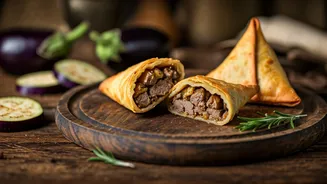
This ancient recipe is found within a text known as the Ni'matnama, or the 'Book of Delights.' This culinary manuscript was meticulously compiled between 1501 and 1510 for the Sultan of Mandu, a ruler in central India. During this period, the samosa was far removed from its current status as a common street food; it was a sophisticated dish prepared exclusively within opulent royal kitchens. The ingredients specified in the manuscript underscore its luxurious nature. Instead of the familiar potato stuffing prevalent today, this historical samosa featured a filling made from roasted aubergine pulp, dried ginger, and finely minced lamb, all expertly sautéed with onions and garlic. The entire creation was then meticulously fried in ghee, a clarified butter, to achieve a rich and delicate finish.
Absence of Aloo & Mirchi
One of the most striking revelations from this ancient recipe is the complete absence of potatoes and chillies, ingredients that are now intrinsically linked with the modern samosa. These staple components were not yet integrated into Indian culinary practices at the time this recipe was documented. Their later introduction dramatically altered the flavor profile of the samosa, rendering the original 16th-century version quite distinct from the taste sensations contemporary palates are accustomed to. This historical context highlights how ingredients travel and evolve, transforming dishes over centuries of cultural exchange and adaptation.
From Palaces to People
The evolution of the samosa from a dish confined to royal residences to a widely accessible snack is a testament to its enduring appeal. As the recipe disseminated beyond the confines of aristocratic kitchens and became embraced by the broader populace, it underwent significant transformations. The preparation methods and ingredients were simplified to cater to everyday cooking and wider availability. This gradual process of adaptation led to the development of the more straightforward and accessible version of the samosa that has become a beloved and iconic street food staple across India today.
Online Discourse Ignited
The viral sharing of this historical samosa recipe has undeniably sparked a lively and extensive discussion across the internet. Many participants are reflecting on the profound connection between food, history, and cultural identity. Comments on social media platforms often express wonder at how deeply ingrained food is in the fabric of history, with one user aptly noting, 'This shows how food is also a part of history and culture.' There's also a recognition of the samosa's journey, with another comment suggesting, 'Everyone links the samosa to India today. It’s an immigrant.' However, not all viewpoints align, as evidenced by a counter-argument asserting, 'The samosa is an Indian invention. The Arabs brought it back from India after their invasion in the 7th century.' This ongoing dialogue underscores the complex and often debated historical pathways of culinary traditions.