





Space Versus Sea
Sam Altman, the prominent CEO of OpenAI, has voiced considerable skepticism regarding the viability of establishing data centers in outer space, a concept
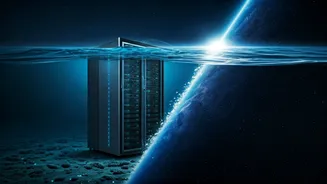
that has garnered attention in discussions involving Elon Musk's SpaceX and Alphabet Inc.'s Google. In a recent podcast appearance, Altman candidly stated, "I wish Elon luck," indicating his reservations about the ambitious orbital computing projects. He proposed that constructing and maintaining data centers beneath the ocean's surface could potentially present fewer engineering hurdles and offer more straightforward cooling solutions compared to their extraterrestrial counterparts. Altman pointed out that the vast majority of individuals involved in ocean robotics are not currently considering deploying data centers at the bottom of the sea, suggesting that this avenue might actually be less complex than developing space-based computing facilities. These remarks surface at a time when numerous technology firms are actively expanding their AI infrastructure to accommodate the insatiable and rapidly growing demand for computing power.
Orbital Computing Push
The notion of orbital data centers has re-emerged as a focal point for technological innovation, particularly following recent reports detailing discussions between SpaceX and Google concerning potential space-based computing initiatives. The fundamental idea behind these orbital data centers is to position compact computing facilities in orbit, thereby enabling companies to potentially circumvent limitations associated with terrestrial land availability, navigate complex permitting processes, and alleviate certain constraints related to power grids that often burden traditional data centers. Google, for instance, has been actively investigating prototype orbital systems through an endeavor known as Project Suncatcher, with plans to potentially launch small computing satellites by the year 2027, as announced by the company in November. Despite these explorations, Altman highlighted that substantial obstacles in engineering and energy generation persist. While acknowledging that space offers an unrestricted environment, free from land costs and regulatory entanglements, he emphasized that sourcing energy and establishing robust infrastructure in such extreme conditions remain significant challenges.
AI Infrastructure Demands
The burgeoning field of artificial intelligence has positioned AI infrastructure as one of the most dynamic and sought-after areas for technological investment. Companies worldwide are relentlessly pursuing novel strategies to bolster computing capacity, essential for the operation and advancement of sophisticated AI systems. This intensified demand has consequently spurred considerable interest in alternative infrastructure models. Among these, space-based computing projects, often linked to SpaceX's long-term strategic objectives and potential future public offerings, have attracted significant attention. Simultaneously, major cloud service providers, including Amazon.com Inc., Microsoft Corp., and Google, are continuing their efforts to support the escalating computational needs of AI. The current AI boom is exerting considerable pressure on existing power grids, exacerbating challenges in chip supply chains, and straining cooling infrastructure. In parallel, companies are developing increasingly powerful servers specifically designed to handle the intensive requirements of AI applications. The ongoing discourse, exemplified by Altman's comments, underscores the growing questions surrounding the ultimate location and implementation of future AI infrastructure as the global demand for computing power continues its rapid ascent.