


A Grand State Dinner
Centuries before the advent of modern fine dining and curated tasting experiences, Indian royalty was already a master of elaborate and sophisticated meal
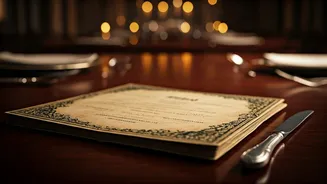
planning. A recently circulating vintage menu from the Makarpura Palace in Baroda offers a captivating testament to this historical culinary artistry. The occasion was a grand state dinner hosted by Maharaja Sayajirao Gaekwad III of Baroda for Maharaja Madhavrao Scindia I. This unearthed document, dated to a winter evening in January, bears the Maharaja's seal and details a lavish spread that rivaled the finest European establishments of the era, demonstrating an impressive early adoption of global culinary trends and techniques by Indian rulers.
Exquisite European Selections
The menu from Maharaja Sayajirao Gaekwad III's state dinner presents a truly remarkable array of European-inspired dishes, indicating a sophisticated palate and access to diverse ingredients and culinary methods far beyond what might be commonly assumed for the period. The meal commenced with 'Anchois la Norwginne', a preparation of anchovies typically served chilled, followed by a smooth 'Pure d’asperges', a refined asparagus puree. 'Poisson la Villeroy' showcased a delicately coated fish dish, while 'Ctelettes de livre l’allemande' introduced a richer flavor profile with German-style hare cutlets. Complementing these were 'Salad Russe', a classic Russian salad, and 'Cauliflower la Hollandaise', which is essentially cauliflower served with a buttery sauce. The inclusion of 'Crevettes curry et ris', a comforting combination of shrimp curry and rice, offered a familiar yet elegant touch, highlighting the fusion of global and local flavors. The logistics required to source and prepare such a diverse range of international dishes without modern infrastructure were undoubtedly significant achievements.
Sweet Endings and Royal Tributes
The dessert course of this historical banquet was equally elaborate, featuring both traditional and European-inspired confections. Guests were treated to 'Pistachoo Pudding (Chaud)', a warm and rich pistachio dessert, followed by 'Glace la Japonaise', a delightful French-style ice cream. Adding a unique touch to the menu were four lines of text printed towards the end. A loose translation reveals a poetic dedication to the guest, with phrases like, 'The asparagus soup is followed by the fish, the rabbit, and the partridge. Turkey roast salad with Dutch sauce on top. Shrimp curry rice is sweet, pudding jelly is creamy. Ice cream is a delicious substance, and I will serve you, O King.' This subtle, elegant message appears to be a low-key, personalized tribute from the host to his distinguished guest, further elevating the dining experience beyond mere sustenance to an art form of hospitality and respect.
A Trend of Royal Gastronomy
This viral menu is not an isolated incident but rather indicative of a broader trend among Indian royalty to embrace and master global culinary arts. Historians like Neha Vermani have unearthed other comparable menus, such as one featuring dishes like fish in mayonnaise sauce, chicken soup with truffles, and Italian-style mutton cutlets, sourced from archives abroad. Hosting dignitaries from other princely states presented an opportunity for rulers to showcase their wealth, sophistication, and cosmopolitan outlook, with food serving as a universal language of diplomacy and goodwill. The adoption of French-style menus, in particular, signaled modernity and global awareness, a reflection of the era's appreciation for European delicacies as markers of luxury and cultural refinement. These royal kitchens were far more than just places for preparing traditional Indian fare; they were centers of innovation where cooks actively learned and incorporated European techniques, meticulously integrating them into their elaborate feasts.