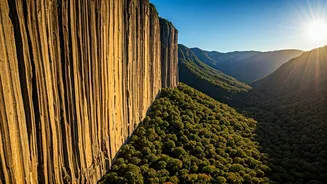









Cochamó's Untamed Beauty
Nestled deep within the Chilean Andes, the Cochamó Valley has long been celebrated by adventurous climbers for its resemblance to Yosemite but with a wild,
untouched allure. For three decades, this remote paradise has beckoned with its towering 3,000-foot granite formations, verdant forests, and a refreshing absence of crowds. Here, traditional hand-drawn maps still guide climbers, and the lack of digital connectivity fosters a truly immersive, off-the-grid experience. Cochamó is a haven for those who crave multi-pitch trad climbing amidst raw, pristine wilderness. Its recent designation as a protected area, thanks to a significant $78 million fundraising effort by Conserva Puchegüín which secured over 328,000 acres from development, ensures its natural splendor will endure for generations of climbers to come. This valley represents an unparalleled opportunity for adventure, offering a rare blend of challenging climbs and profound natural beauty.
Introducing Filo Estatico
While Cochamó boasts ambitious first ascents like the challenging 'Picaflor' (5.13+), accessible routes have historically been scarce, with most established lines demanding at least a 5.10c difficulty. This gap is now being addressed, opening the valley's wonders to a broader range of climbers. The latest testament to this evolution is 'Filo Estatico,' a remarkable 10-pitch route established on February 15th. This 5.10+ line, stretching an impressive 1,300 feet, winds up the west ridge of Cerro Ojo, a prominent sub-peak near Valle Trinidad. It offers a captivating mix of climbing styles, from intricate crack systems to engaging face sections, all set against a backdrop of spectacular valley panoramas. The route comprises seven pitches graded between 5.10 and 5.10+, complemented by easier pitches of 5.5, 5.7, and 5.9, culminating at the summit of Cerro Ojo. German climbers Lando Peters and Nico Rolinck, who spearheaded the first ascent, describe the route as encompassing the quintessential Cochamó climbing experience.
Pitch Highlights & Gear
The allure of 'Filo Estatico' extends across its entire length, promising a diverse and exciting climbing experience. According to its first ascenders, the route showcases the best of Cochamó's granite. One particularly memorable section is the second pitch, renowned for its elegantly curved splitter cracks near the top and a distinctive crack roof mid-pitch, offering enjoyable, albeit not overly demanding, climbing. The crux of the route is often considered to be Pitch 8, identified by its striking finger crack, which was a key feature spotted from across the valley during the route scouting. For standard ascents, the route requires a double rack of cams, including a #4 cam, along with a selection of smaller micro-cams for precise placements. A 70-meter rope is advisable for Pitch 6, particularly if parties wish to avoid simul-climbing that section. Careful planning regarding gear selection is crucial for a safe and successful ascent of this exceptional multi-pitch line.
Planning Your Expedition
Successfully embarking on the 'Filo Estatico' adventure necessitates meticulous planning, especially concerning logistics and accommodations. Securing a spot at the La Junta campground is paramount, as reservations often fill up months in advance due to its popularity. Upon arrival in Cochamó, allocate a full day to hike to La Junta. Subsequently, dedicate another day to transporting your essential climbing gear, camping equipment, and food to the Valle Trinidad bivy sites. Importantly, these bivy locations do not require prior reservations. The morning of your climb, you’ll only need a short, 15-minute walk from your bivy to reach the starting point of 'Filo Estatico.' For your descent, rappelling down the face of Cerro Ojo is a viable option, utilizing the neighboring route, 'Homo Santa' (5.11a). Comprehensive route information and general climbing details for Cochamó can be found on online guidebooks, serving as invaluable resources for preparing for this exceptional journey.