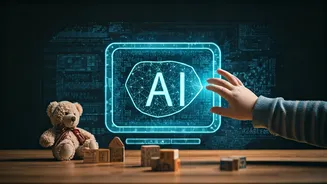








The AI Era's Human Imperative
In our rapidly advancing technological landscape, where artificial intelligence permeates education, work, and everyday routines, a significant challenge
emerges: preserving our innate human sensitivities. While machines excel at processing vast amounts of data with unparalleled speed and precision, they are fundamentally incapable of replicating the nuances of empathy, the complexities of moral reasoning, or the depth of emotional understanding. These distinctively human capacities are precisely what set us apart and remain irreplaceable. Research indicates that while analytical thinking and technical proficiencies are gaining prominence, skills such as empathy, effective leadership, and social influence are consistently identified as the most sought-after human capabilities that cannot be automated. This underscores the enduring significance of human-centric attributes, particularly in formative environments like educational institutions and in the development of future leaders. As children grow alongside sophisticated AI systems that offer instant responses and simulated interactions, the development of genuine emotional intelligence becomes paramount. Experts emphasize that this intelligence is cultivated not through automation, but through rich, lived experiences, active listening, constructive disagreement, thoughtful reflection, and the ability to accurately perceive emotions in oneself and others. These vital qualities necessitate dedicated time, consistent presence, and intentional guidance from caregivers.
Cultivating Core Human Skills
As educational systems increasingly embrace digital tools and sophisticated AI, the roles of both educators and parents become even more critical in shaping well-rounded individuals. It's imperative that the instruction children receive in leveraging technology is harmoniously balanced with guidance on how to foster meaningful relationships, navigate uncertainty, and grapple with complexity. Foundational skills such as empathy, ethical decision-making, and self-regulation are not merely supplementary; they are the bedrock of profound learning experiences and the development of responsible citizenship. In an era often characterized by an obsessive pursuit of efficiency, it is essential to re-emphasize the profound value of genuine human connection. Emotional intelligence empowers individuals to collaborate effectively, to lead with unwavering integrity, and to navigate ambiguous situations with remarkable resilience. These are not inconsequential 'soft' attributes, but rather core competencies that will define success in the future workforce. As we prepare children for a world inevitably shaped by artificial intelligence, our objective should not be to outcompete machines, but to diligently cultivate the very qualities that make us uniquely human. Empathy, deep reflection, and astute moral discernment will undoubtedly define the leaders of the coming generations. By nurturing these intrinsic qualities, education serves not only to ensure relevance in a changing world but also to safeguard the very essence of our humanity.
Building Emotional Fortitude
In our current era, where artificial intelligence is becoming an integral part of learning environments, it is vital that educational frameworks prioritize the development of ethical reasoning, empathy, and meaningful human connection alongside digital literacy. This approach positions these human-centric skills as fundamental pillars of development, rather than secondary considerations. The foundation for building emotional strength in children begins with actively fostering their emotional intelligence (EQ). In a culture that often encourages instant gratification and immediate outcomes, parents should make a conscious effort to prioritize delayed gratification. Resilience is intrinsically forged through facing and overcoming challenges; conversely, providing children with instant access to every desire can hinder their capacity to navigate life's inherent difficulties. It is crucial to instill the understanding that rewards are typically a consequence of dedicated effort, thereby teaching them that true satisfaction is earned, not simply given. Furthermore, the concept of 'digital intelligence' must be firmly grounded in ethical principles. Simply being technologically adept is insufficient; children must develop a comprehensive understanding of both the advantages and disadvantages of AI. They need to learn to utilize technology as a tool for creativity and augmentation, rather than allowing it to become a substitute for their own cognitive processes. By consciously balancing screen time with 'soul time' – which encompasses physical activity, real-world problem-solving, and meaningful interpersonal interactions – parents can ensure their children grow into active creators and engaged participants in their world, rather than passive consumers. In this equilibrium, technology ideally serves to enhance the human experience, while our emotional core remains the guiding compass.