







Venturing Offshore
The insatiable hunger of artificial intelligence for processing power is driving a search for new frontiers in data center infrastructure. While some are
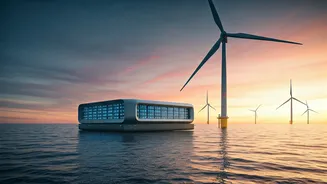
gazing skyward towards space for solar energy, a more grounded, yet equally ambitious, approach is taking root beneath the waves. Offshore infrastructure providers are developing novel floating platforms designed to seamlessly integrate high-performance computing capabilities with renewable energy generation, specifically wind power, and built-in battery storage. This innovative concept reimagines data centers not as land-bound behemoths but as maritime facilities, bringing computational power directly to abundant energy sources and natural cooling systems.
A Sea of Opportunity
The rationale behind this oceanic shift is compelling. Building massive data center campuses on land, particularly near population centers, presents increasing hurdles related to energy procurement, land availability, and water access for cooling. Offshore environments, however, offer a different landscape of advantages. They provide virtually limitless access to energy, ample space, and the ocean itself acts as an inexhaustible heat sink, a crucial element for managing the thermal output of powerful computing hardware. Furthermore, areas already designated for floating wind farm installations can be readily repurposed for data center deployment, accelerating the timeline for bringing these facilities online.
Modular and Pre-fabricated
The proposed offshore data centers are envisioned as "flat-packed" solutions, emphasizing efficiency and ease of deployment. The architectural approach involves integrating the wind turbine substructure and the data center enclosure into a single, cohesive steel unit. This modular design allows for pre-fabrication in controlled factory environments, simplifying the logistical challenges of offshore construction. Once manufactured, these integrated units can be efficiently transported and lifted into place during the final stages of assembly, streamlining the deployment process for these complex maritime facilities.
The Offshore Advantage
The CEO of Aikido Technologies highlights the strategic importance of this offshore direction, stating, "Before we go off-world, we should go offshore." This sentiment underscores the immediate practical benefits of ocean-based data centers compared to the more futuristic prospect of space-based facilities. While space offers the allure of near-limitless solar energy and fewer terrestrial environmental concerns (ignoring rocket launch impacts), it also presents significant drawbacks. Launching such infrastructure into orbit would be prohibitively expensive, cooling would be a major engineering challenge without atmospheric airflow, and long-term maintenance and upgrades would be exceedingly difficult. Ocean-based solutions, while not without their own challenges, offer a more accessible and manageable step forward.
Navigating Ocean Challenges
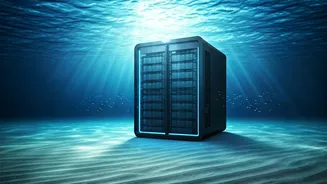
Despite the promise, establishing data centers at sea introduces a unique set of environmental and engineering hurdles. Potential issues include the impact of wave action on the structures, the complexities of anchoring systems, and the persistent threat of seawater corrosion to sensitive equipment. Furthermore, while the surrounding water is utilized for cooling, this process will inevitably warm the local marine environment, raising concerns about potential impacts on aquatic ecosystems. However, past experiments, such as Microsoft's submerged data center near Scotland, have shown intriguing results, with marine life colonizing the structure and suggesting a potential for these facilities to become integrated parts of the marine habitat, even offering shelter to undersea creatures.