





Rover's New GPS
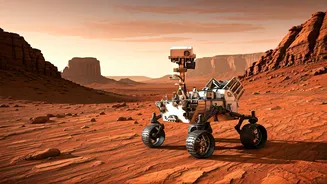
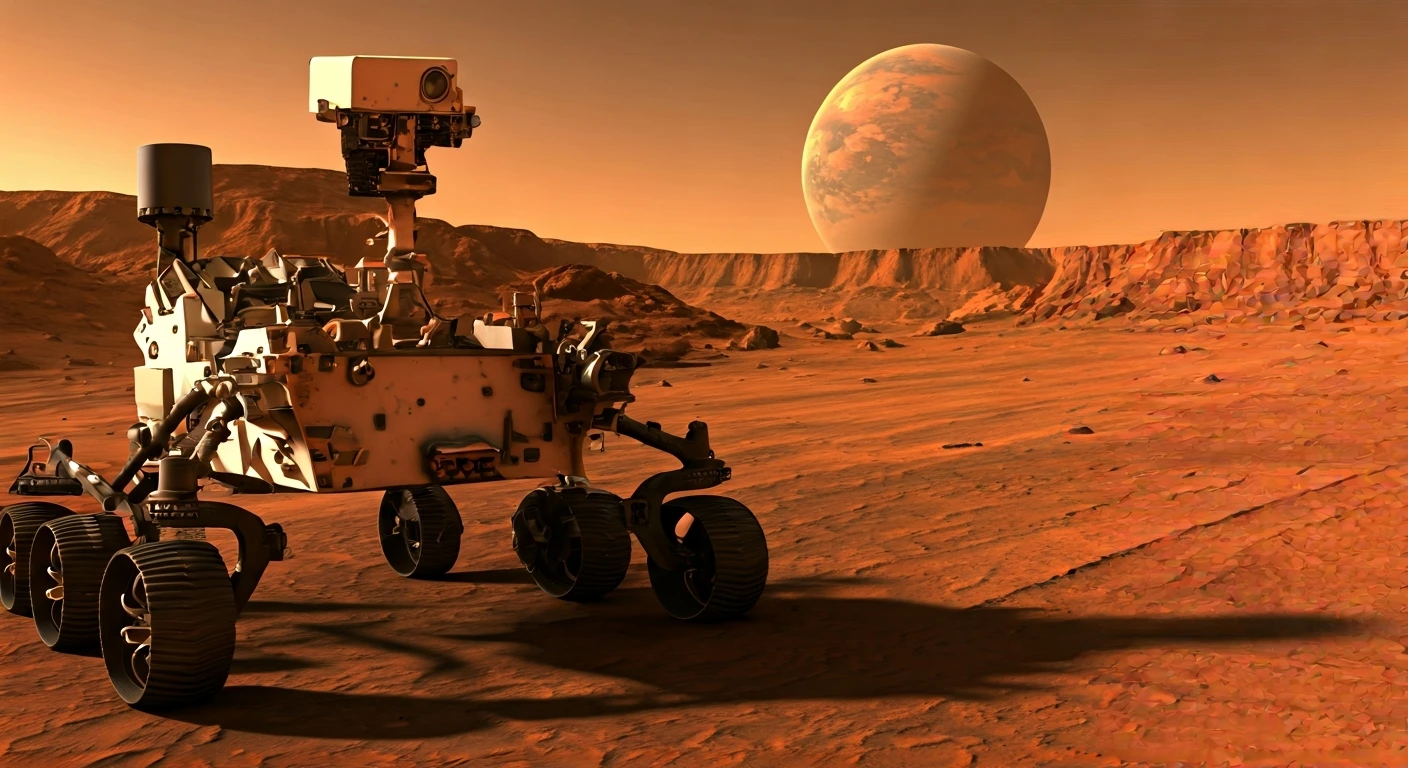
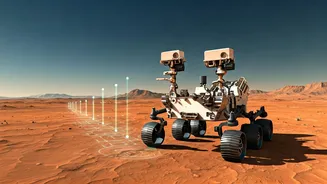
NASA has bestowed a significant technological enhancement upon its Perseverance rover, essentially giving it a personalized GPS system for the Martian
terrain. This innovative feature allows the rover to pinpoint its exact location on the Red Planet with remarkable accuracy, a feat previously unachievable with such precision. Unlike Earth's GPS systems that rely on satellites orbiting the planet, Perseverance's navigation system operates by creating a detailed map of its surroundings and then triangulating its position within that map. This is achieved through a combination of sophisticated sensors and advanced algorithms that process images and other data collected by the rover. The ability to precisely know its coordinates is paramount for its scientific endeavors, enabling it to meticulously document geological features, identify areas of interest for sample collection, and return to specific locations with unparalleled fidelity. This upgrade fundamentally transforms the rover's autonomy, reducing its reliance on constant ground control for navigational commands and allowing for more efficient and independent exploration of Jezero Crater.
Enhanced Exploration
The implementation of this new GPS-like functionality is poised to dramatically amplify the scope and effectiveness of Perseverance's scientific mission. With the ability to navigate with such exactitude, the rover can now embark on more ambitious traverses across the Martian landscape, exploring regions previously considered too challenging or time-consuming to reach. This enhanced precision is particularly vital for tasks requiring meticulous placement, such as deploying scientific instruments at specific geological sites or accurately returning to areas from which samples have been collected. Furthermore, by understanding its precise location relative to pre-determined scientific targets, Perseverance can optimize its operational efficiency, minimizing wasted time and energy on redundant movements. This sophisticated navigation empowers the rover to make more informed decisions autonomously, accelerating the pace of discovery and allowing scientists on Earth to receive more detailed and contextualized data. The implications for future missions are also significant, as this technology could pave the way for even more sophisticated robotic explorers capable of navigating complex extraterrestrial environments independently.