






Citizen Science Opportunity
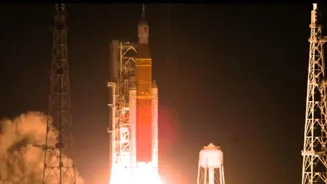
The Artemis 2 mission presents a unique chance for individuals to contribute to scientific understanding through citizen science. Beyond aiding in asteroid
defense, those possessing Unistellar smart telescopes are invited to observe and record the light curve generated during the Artemis 2 mission's launch and re-entry phases. This initiative builds upon Unistellar's successful track record of observing significant launches, including past missions where members provided valuable light curve data for the James Webb Space Telescope from its liftoff to its cosmic destination. This offers an accessible pathway for anyone, regardless of their formal astronomy background, to engage with and contribute data to a monumental NASA lunar expedition. Dr. Ryan Lambert from the SETI Institute is spearheading this effort, emphasizing that widespread, even amateur, telescopic observation is crucial, as collective efforts can span longer durations than a single professional instrument, thereby enhancing the overall data richness of the mission.
Mission Significance
As the Artemis 2 spacecraft embarks on its journey towards the Moon, this mission signifies a pivotal moment for furthering our comprehension of both the mission's trajectory and the broader lunar environment. Dr. Franck Marchis, a senior planetary astronomer at the SETI Institute and a co-founder of Unistellar, highlights that coordinated citizen observations can yield invaluable insights that supplement data gathered by professional observatories. Amateur astronomers, by capturing critical moments of the mission, can play an instrumental role in refining tracking accuracy, enhancing mission analysis processes, and fostering a stronger collaborative bond between the public and the scientific community. This collaborative approach underscores the idea that collective observation contributes significantly to the scientific endeavor, making these civilian contributions essential for a more comprehensive understanding of space exploration.
Pre-Launch Preparations
Before the Artemis 2 mission commences, prospective observers should undertake several key preparations to ensure a successful observation experience. Firstly, identifying an optimal observation spot is crucial; ideally, this location should offer an elevated vantage point or an unobstructed view of the horizon, free from significant light pollution. Secondly, a thorough check of the prevailing sky conditions is essential to ascertain the feasibility of observation. Finally, it is highly recommended to practice with your telescope, focusing on fine-tuning the instrument's focus and exposure settings, particularly for models like the eVscope 2 and eQuinox 2. This practice will ensure that when the launch occurs, you are fully prepared to capture clear and precise observations of the Artemis 2 rocket. It's important to note that effective citizen science observation with a Unistellar telescope is achievable even from areas experiencing urban light pollution.
Observational Setup
Engaging in citizen science observation for the Artemis 2 mission requires a straightforward setup using your Unistellar telescope and its accompanying app. The initial step involves connecting your Unistellar telescope to the Unistellar Application. Subsequently, you'll need to create an account within the Unistellar app using a valid email address. Navigate to the app's designated section for celestial targets and select 'Artemis 2' (or 'Artemis II' as it may appear in the app). Input the anticipated date, time, and your planned observation location. If a target is not yet visible, a grayed-out eye symbol will indicate this. Once these details are entered, generate the observation plan, which will provide a link to direct you back to the app. Re-establish your telescope's connection and select the 'GoTo' function. Confirm the settings, and the app will automatically populate the necessary right ascension (RA) and declination (Dec) coordinates for your telescope. Save these settings. After your telescope has completed its movement to the target, you can initiate the observation by pressing the 'Record' button. The telescope will then track the rocket in real-time. Should the target temporarily disappear from view, consult the ephemeris page within the app to determine its next visible period. In the days following your observation, you will receive an invitation to join the official Slack community, which is beneficial but not mandatory for conducting and recording your observations.