









The Rise of Flexibility
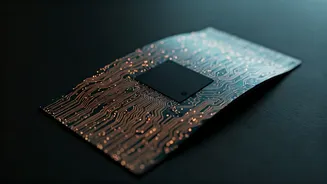
The landscape of electronic components is undergoing a dramatic transformation with the emergence of highly flexible AI chips. Unlike their rigid predecessors,
these novel chips are engineered to bend, fold, and even stretch without compromising their operational integrity. This inherent adaptability opens up a world of possibilities for device design, allowing for seamless integration into surfaces and forms that were previously unimaginable. Imagine smartwatches that conform perfectly to your wrist, or health monitors that can be comfortably worn on any part of the body, irrespective of its contours. This flexibility is not merely a design advantage; it's a fundamental shift that enables devices to be more ergonomic, unobtrusive, and ultimately, more integrated into our daily lives. The ability to bend also suggests increased resilience against everyday wear and tear, potentially leading to more durable and long-lasting electronic gadgets that can withstand the dynamic movements and pressures encountered by users throughout their day.
Wearables Reimagined
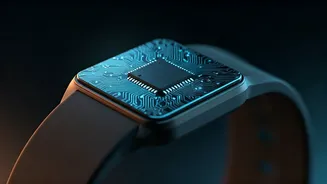
The most immediate and profound impact of bendable AI chips will be felt within the realm of wearable technology. Current wearables, while advanced, are often limited by their rigid form factors, which dictate where and how they can be worn. Bendable chips shatter these limitations, enabling a new generation of devices that can be seamlessly integrated into clothing, accessories, or even directly onto the skin. This could lead to the development of 'smart textiles' where sensors and processing power are woven into the fabric itself, providing continuous health monitoring or interactive features without the need for bulky external devices. Furthermore, the enhanced flexibility allows for a more personalized and comfortable fit, reducing the bulk and discomfort often associated with existing smartwatches and fitness trackers. Applications could range from adaptive sportswear that monitors athletic performance in real-time to discreet medical sensors that provide continuous patient data without being intrusive. The potential for more natural and intuitive human-device interaction is immense, moving beyond screens and buttons to more integrated and responsive experiences.
Beyond the Wrist
The transformative power of bendable AI chips extends far beyond just smartwatches and fitness bands. Their adaptability makes them ideal candidates for a multitude of emerging technological frontiers. Consider the field of advanced prosthetics, where flexible electronics could enable more natural and responsive artificial limbs that better mimic the intricate movements of their biological counterparts. In the medical sector, these chips could form the basis of sophisticated, flexible biosensors capable of continuous monitoring of vital signs, drug delivery, or even early disease detection, all within a comfortable and unobtrusive form factor. Furthermore, the automotive industry could leverage this technology for interior dashboards that conform to unique shapes or for advanced driver-assistance systems. Even in the realm of virtual and augmented reality, bendable displays and sensors could lead to more immersive and lightweight headgear. The inherent durability and conformability also suggest applications in harsh environments or in devices that require close contact with irregular surfaces, opening doors to innovations we can only begin to conceptualize.