




Professional Diagnosis Essential
While self-investigation can offer hints, definitive answers about hair loss require expert insight. Dermatologists and trichologists possess specialized
diagnostic tools, such as trichoscopy, to examine your scalp for signs of follicle miniaturization, a key indicator of genetic hair loss. They may also conduct a 'pull test' to gauge the ease with which hair detaches and order blood tests to screen for underlying nutritional deficiencies (like iron or vitamin D) or hormonal imbalances (such as thyroid issues), which can trigger non-genetic shedding. Relying solely on guesswork can delay appropriate treatment and exacerbate the problem.
Examining Strand Characteristics
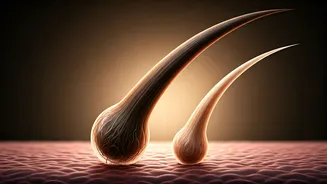
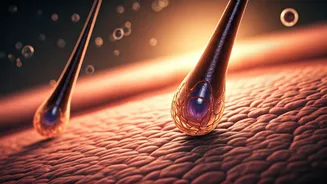
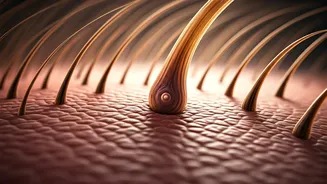
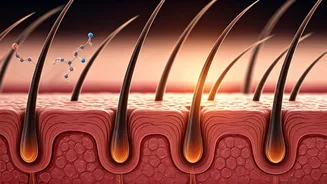
A crucial diagnostic clue often overlooked lies in the physical characteristics of the hairs themselves. In instances of genetic hair loss, known as androgenetic alopecia, a process called miniaturization occurs. This means the hair follicles progressively shrink, causing them to produce progressively finer, shorter, and weaker strands. Eventually, these weakened follicles cease to produce hair altogether. Conversely, hair lost due to non-genetic factors typically consists of strands that are of normal thickness and length, but have simply fallen out prematurely before completing their natural growth cycle.
Mapping Your Hair Loss Pattern
Observing the precise location of hair thinning offers significant insight into its origin. Genetic hair loss adheres to predictable patterns. For men, this often manifests as receding hairlines at the temples, forming an 'M' shape, accompanied by thinning at the crown. Women experiencing genetic loss usually retain their frontal hairline but notice a generalized thinning across the scalp and a widening of their natural part. Non-genetic hair loss, however, tends to be more erratic. It can present as diffuse thinning, where hair loss is uniform across the entire scalp, or as distinct, coin-sized bald patches, characteristic of alopecia areata, an autoimmune condition.
The Pace of Hair Shedding
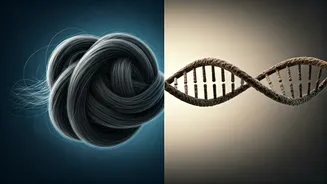
The speed at which you notice hair loss is a significant differentiator. Androgenetic alopecia, the medical term for genetic hair loss, is typically a gradual process, often developing over many years or even decades. This slow decline is attributed to a hereditary sensitivity to DHT, a hormone that progressively shrinks hair follicles. In contrast, non-genetic hair loss is often abrupt and dramatic, acting as a physical reaction to an acute systemic shock. If you're suddenly experiencing large clumps of hair coming out in the shower or finding an excessive amount of hair on your brush, genetics are likely not the primary cause.
Identifying External Triggers
Consider your recent life events, specifically looking back two to three months prior to noticing increased hair fall. Significant periods of anxiety, severe illness, surgical procedures, childbirth, or restrictive dieting can all act as catalysts for non-genetic hair loss. This type of shedding usually manifests several months after the stressful event. Furthermore, look for accompanying symptoms on your scalp. While a healthy, normal scalp might suggest genetics, issues like burning, itching, or flaking, along with loss of eyebrows or eyelashes, strongly indicate a non-genetic health problem requiring medical attention.