







Echoes of the Cold War
Nestled discreetly near Denver, Colorado, stands a colossal structure with a past steeped in geopolitical tension: a decommissioned Titan I nuclear missile
silo. This imposing facility, originally commissioned in 1959 at a substantial cost of $47 million (equivalent to approximately $350 million today), was designed to house and launch three 4.5-megaton nuclear missiles. Its construction represented a significant investment in defense strategy during the height of the Cold War. The Titan I missile system, developed in the mid-1950s, was a formidable intercontinental ballistic missile, standing 98 feet tall and capable of reaching targets over 6,000 miles away. Eighteen such silos were established across the United States to serve as strategic deterrents. A key feature of these sites was their self-sufficiency; powered by four large diesel engines, they could operate independently of the national electrical grid. The fuel storage capacity was immense, with a single 50,000-gallon diesel tank sufficient to power around 2,000 homes for approximately two weeks, highlighting the operational independence envisioned for these critical military installations.
A 'Thrillionaire's' Vision
Enter Nik Halik, an Australian venture capitalist with an unconventional approach to asset management. Dubbed a 'thrillionaire,' Halik is renowned for his daring pursuits, including skydiving over Mount Everest and diving to the Titanic's wreck. His fascination with historical, robust structures like castles and underground bunkers aligns perfectly with his entrepreneurial philosophy of 'value-facturing' – identifying and enhancing the potential of unique properties. Halik acquired this specific Titan I silo in 2021 for over $10 million, embarking on an ambitious five-year renovation project. His goal is to transform the 200,000-square-foot facility into a cutting-edge data center designed to support the burgeoning field of artificial intelligence. The project is a testament to his ability to see future utility in sites with formidable pasts, blending his adventurous spirit with a keen business acumen.
From Obsolescence to Innovation
The Titan I missile system, despite its initial imposing presence, had a remarkably short operational lifespan. All 54 deployed missiles were decommissioned by January 1965, rendered obsolete by rapid technological advancements that quickly led to the development of the Titan II and Minuteman I ICBMs. Following their removal, the US government systematically stripped the silos of valuable components before selling most of the facilities to private and public entities. Halik's silo, post-decommissioning, reportedly served various government defense contractors and the Defense Advanced Research Projects Agency (DARPA) before his acquisition. Halik is now investing an estimated $30 million to revitalize the complex, a significant undertaking given the inherent challenges of working within such a historically preserved, yet hazardous, environment.
Navigating Hidden Dangers
The renovation of the Colorado silo is a complex and perilous undertaking, fraught with considerable safety risks. Beyond the visible signs of decay like rusty metal and loose wiring, the lower levels of the complex harbor more insidious threats, including significant concentrations of cyanide, lead paint, mercury, and asbestos. Halik has personally navigated these dangers, documenting his exploration and renovation process on his YouTube channel, 'Nuclear Bunker Living.' His hands-on approach has often involved venturing into tight, potentially hazardous spaces, highlighting the unforgiving nature of the structure. In one instance, he narrowly avoided electrocution when crawling through a pipe that unexpectedly carried live electrical current. This environment demands constant vigilance and a deep understanding of the risks involved, as Halik himself notes, 'This place is unforgiving, and it always reciprocates with interest.'
Architectural Marvels Underground
The silo complex is an engineering marvel, descending approximately 165 feet below the surface to accommodate the towering 98-foot Titan I missiles and their launch apparatus. The sprawling 200,000-square-foot facility comprises 17 distinct chambers, interconnected by an extensive network of tunnels spanning 4,500 feet. This intricate design includes specialized areas such as launcher rooms, control domes, and a power dome, creating a self-contained underground world. The most secure sections of the complex were constructed with exceptional resilience, utilizing what Halik describes as 'Hoover Dam-type engineering.' These walls, composed of multiple layers of steel-reinforced concrete, were engineered to withstand immense pressure, with each square inch capable of bearing approximately 15,000 pounds. These robust defenses were designed to protect the missile operators who stood ready in the control room, poised to initiate launches based on directives from the Pentagon.
A Glimpse into the Past
Within the silo's depths, echoes of its former life as a launch control center persist. Halik intends to transform one section into a museum, preserving the historical significance of the site. The control room, where missile operators made critical decisions, still contains remnants of its operational past, including parts of the original desk used for programming launches. Recently, Halik and his team unearthed significant historical documents, such as papers detailing launch codes, precise timings, and operational protocols, offering a tangible connection to the high-stakes environment of the Cold War. These artifacts provide invaluable insights into the procedures and mindset of those who held the keys to immense destructive power, underscoring the gravity of the decisions made within these fortified walls.
Reimagining Future Spaces
Beyond historical preservation, Halik has bold plans for repurposing other areas of the vast underground complex. One notable vision involves transforming a large chamber into a vibrant nightclub, complete with a DJ booth, bar, consumption lounges, and entertainment inspired by performances like Cirque du Soleil. This concept of experiential spaces in unconventional venues is gaining traction, with similar events like a festival at a New Mexico missile silo already showcasing the potential for artistic and cultural gatherings in unique, historic locations. These creative endeavors highlight Halik's innovative approach to asset utilization, breathing new life into dormant structures and turning them into dynamic destinations for entertainment and community.
The AI Data Center Advantage
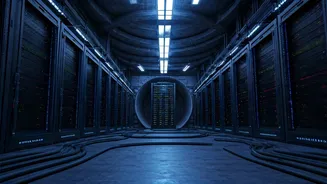
Chief among Halik's ambitious plans is the establishment of a cutting-edge data center within the silo, specifically designed to power the rapidly expanding field of artificial intelligence. AI systems demand substantial computational power and secure, stable environments for data processing, making underground locations like this silo an ideal solution. A crucial environmental advantage of the silo is its consistently cool temperature, hovering around 52 degrees Fahrenheit even during summer months. This natural cooling is exceptionally beneficial for data centers, as it significantly reduces the energy required to prevent server overheating, a major operational cost in conventional facilities where cooling can consume over 30% of electricity. Halik emphasizes AI's critical need for both abundant power and secure processing environments, positioning his repurposed silo as a prime candidate to meet these demands.
Self-Sustaining Power Solutions
A key element of Halik's vision for the AI data center is its potential for complete energy independence from the grid. To achieve this, he plans to replace the silo's original diesel power infrastructure with small nuclear reactors. This innovative approach aims to circumvent the logistical challenges associated with refueling traditional power sources, offering a more reliable and sustainable energy solution for the data center's intensive operations. The prospect of in-house, grid-independent power generation is particularly appealing for high-demand applications like AI. Halik has already attracted interest from various technology and AI companies, signaling a growing trend in the industry towards securing dedicated, secure, and resilient locations for critical data infrastructure. This strategic power solution underscores the forward-thinking nature of his project.
A Growing Underground Trend
Halik's initiative aligns with a broader, increasing interest in housing data centers in underground locations. Companies are recognizing the inherent security, environmental, and operational benefits that subterranean facilities offer. For instance, Iron Mountain operates a massive data processing and storage center within a former limestone mine in Pennsylvania, demonstrating the scalability and viability of such projects. This 220-foot-deep facility spans 40 acres, significantly larger than Halik's silo, yet it underscores the same principle: repurposing robust, secure underground spaces for advanced technological needs. The trend indicates a strategic shift towards leveraging these unique environments to meet the evolving demands of data storage and computational power, driven by factors like enhanced security and stable environmental conditions.