





The Final Push
The culmination of an intensive, 58-night effort to dismantle Mumbai's Elphinstone Bridge arrived with a tense, prolonged wait. After countless hours of work,
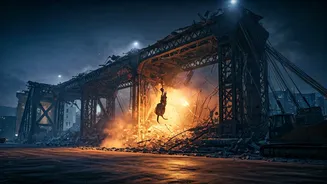
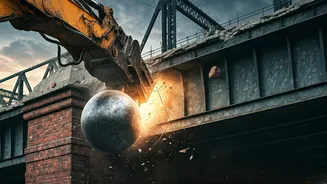
broken only by brief respites, the team faced the stubborn reality of a single, 30,000-kilogram girder. Despite being largely detached and suspended by a crane, the central inch of thick steel resisted severance. As dawn approached, a welder descended, and the focus shifted to securing ropes for controlled descent. A final, decisive push with a crowbar at the girder's base ultimately succeeded, causing it to swing forward. The sky, now bathed in morning light, erupted in a pre-arranged fireworks display, marking the definitive end of a 112-year-old monument that had been a vital artery of the city.
A Bridge's Legacy
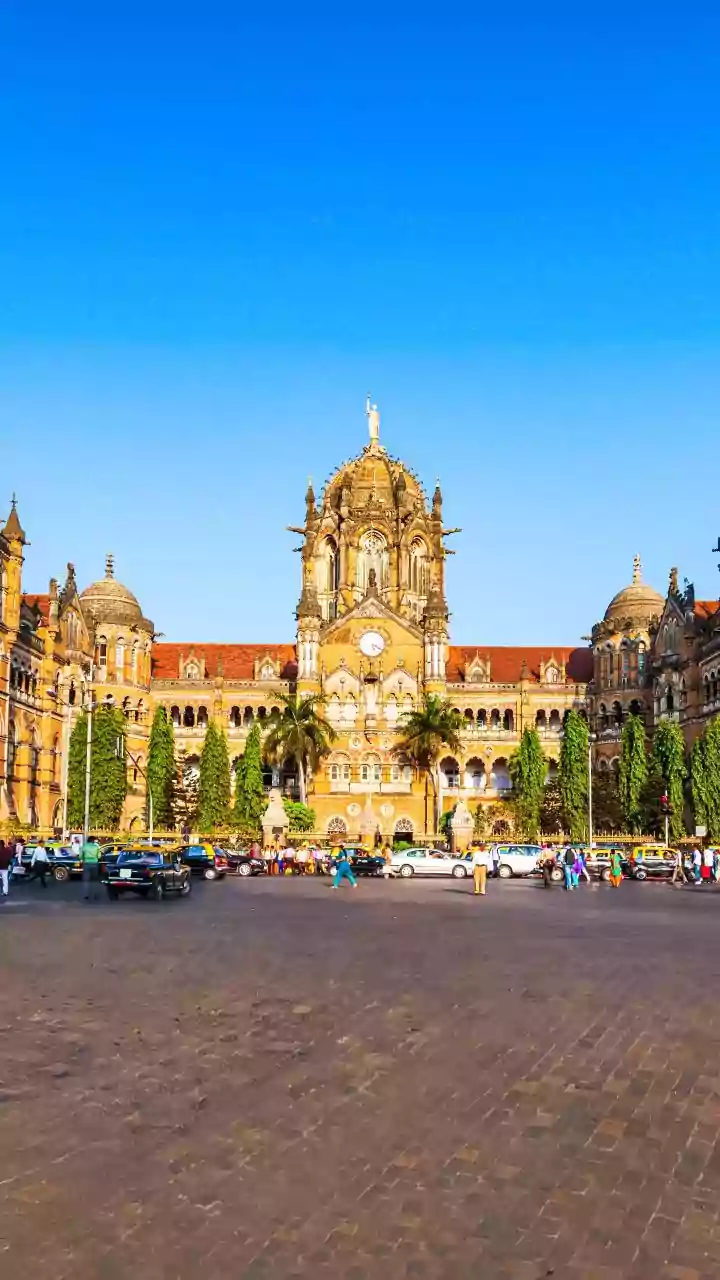
For over a century, the Elphinstone Bridge was more than just a physical structure; it was an ingrained part of Mumbai's daily rhythm, a crucial connector bridging the city's east and west, bisected by sprawling railway lines. Its strategic location near Prabhadevi and Parel stations made it a vital link for commuters heading to bustling office complexes. Its stone steps witnessed a ceaseless flow of people, many seeking shade under its arches for shared taxis or engaging in lively discussions amidst its fort-like walls. However, the relentless march of time and Mumbai's escalating need for rapid transit rendered the old bridge obsolete. Its closure in September 2025 symbolized a broader urban transformation, where traditional basalt construction yields to modern concrete, and the old makes way for ambitious new infrastructure, including a future double-decker bridge designed to integrate with extensive city-wide transit projects.
Engineering Challenges Unveiled
The engineers meticulously studying the bridge's original 1911 blueprints identified natural breaking points, dividing the structure into three distinct sections comprised of 28 individual panels. However, two significant complications emerged that tested their ingenuity. Foremost was the bridge's passage over eleven active railway tracks, necessitating work strictly within narrow, three-hour windows between the last and first trains, or during rare, city-halting longer maintenance blocks. The second major hurdle involved the overhead electrical (OHE) wires powering the trains, which had become perilously entwined with the bridge's structure over decades due to the rising track height and limited clearance, a mere 5.5 meters. Project Manager Anirudh Sharma devised an innovative solution, inspired by a clothesline, to suspend the OHE wires using a temporary beam across the girders, a concept that eventually gained the approval of Western Railway and paved the way for gradual dismantling.
Rhythm Emerges, Setbacks Occur
Despite initial setbacks, including a stalled attempt on New Year's Eve and an overambitious, fast-paced effort on January 3 that consumed precious time with crane positioning and resident negotiations, a functional rhythm began to take shape over January. Nights were strategically dedicated to loosening the panels, leaving just the corners intact to maintain structural integrity. This phased approach culminated on the night the central span over the Western Railway lines was scheduled for removal. Following the departure of the last train around 1:30 am, a power block was initiated. Railway workers meticulously discharged residual electricity from the OHE and then, by ducking under the bridge on inspection wagons, uncoiled the wires. Above, gas cutters worked to sever connections, allowing the crane to extract the panel. The temporary OHE beam held, and the span was successfully removed by 4:30 am, demonstrating the viability of the carefully orchestrated process.
A Glitch in the Plan
By the time February 16 arrived, targeting the central span's demolition, the crew operated with a practiced confidence, their sequence refined into a near-choreographed operation. As the final train cleared the tracks around 1:30 am, a power block was declared. Railway personnel safely discharged the OHE's residual current before commencing the delicate task of unspooling the wires, a process that required workers perched on inspection wagons to duck beneath the bridge. Simultaneously, on the bridge above, teams with gas cutters received their cue, sending sparks showering onto the tracks below. The crane then seized its hold on the panel. Once extracted, the temporary beam was reinstalled, followed by the railway crew who re-secured the OHE by 4:30 am. This methodical extraction was building towards a significant six-hour 'megablock' on March 14, intended to remove both main girders. However, barely an hour into the operation, a catastrophic failure occurred: a hydraulic pipe on the crane burst, causing a leak and immediate dismay. The work was forced to halt, extending the project by another week, though a sense of quiet relief permeated the team, recognizing that the failure happened before they were fully immersed in the most complex stages.
Central Railway Stalemate
While dismantling over the Western Railway tracks neared completion, the operation over the Central Railway tracks remained largely stalled, with only two panels removed in late January. The primary obstacle was Central Railway's refusal to sanction the temporary OHE arrangement that had proven successful on the Western Railway lines. Citing safety concerns and demanding more time for OHE management per block, Central Railway officials requested extended 12-hour blocks, later reduced to six-hour megablocks per panel – a duration doubling that taken on Western Railway and only feasible on weekends. This bureaucratic impasse led to significant financial strain, with the 800MT crane incurring monthly rental costs of approximately Rs 80 lakh, already consuming half the dismantling contract's budget. Project managers, facing mounting delays, considered withdrawing the crane on February 15, but intervention from the MRIDC managing director, leading to a meeting with Central Railway's DRM, ultimately shifted their stance, allowing Western Railway officials to lead the initial dismantling efforts and paving the way for renewed progress.