



A Visual Chronicle
NASA's Curiosity rover has been diligently traversing the Martian landscape for over six years, and a fascinating time-lapse video offers a unique perspective
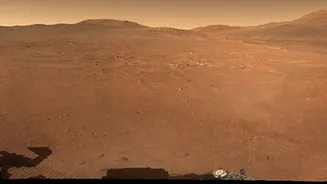
on its extensive travels. This compilation, created from images captured by the rover's right navigation camera between early 2020 and 2026, condenses more than six years of driving into a brief visual narrative. As the rover moves across the varied Martian terrain, from smooth dust to sharp, rocky expanses, the footage reveals the steady progress and the accumulating evidence of its journey. Initially, this camera was positioned to help the mission teams identify interesting geological features and obstacles behind the rover. However, by meticulously stitching together these routine images, engineers have crafted a powerful, long-term record. This continuous visual diary not only documents the rover's movement but also captures environmental changes, offering an unparalleled glimpse into the realities of exploring an alien world. The captured imagery also serves a scientific purpose, allowing researchers to observe sand grains shifting on the rover's deck, which can provide clues about atmospheric conditions and seasonal wind patterns on Mars.
The Toll of Exploration
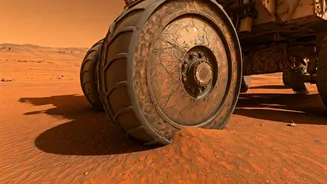
The Martian surface, while appearing serene, presents a formidable challenge to robotic explorers. Curiosity's six wheels, each measuring approximately 20 inches (50 centimeters) in diameter, were engineered with robust aluminum to tackle sharp and uneven ground. Despite these design considerations, the actual Martian terrain has proven more abrasive than anticipated. Shortly after its 2012 landing, mission engineers began observing noticeable damage to these crucial components. The wheels have sustained punctures, tears, and dents as they’ve encountered jagged rocks and rough surfaces over their extended mission. NASA has released images over time that vividly illustrate the escalating wear, with close-up shots revealing significant gashes and holes that sometimes penetrate the wheel's outer layer. Photographs disseminated in 2024 highlighted new damage alongside older scars, underscoring the cumulative impact of more than a decade spent navigating Mars. Remarkably, even with this considerable wear and tear, the rover has maintained its full mobility, a testament to both its resilient design and the meticulous driving strategies employed by the mission's operators.
Lessons in Durability
The extensive experience gained from Curiosity's journey has been instrumental in shaping future Mars exploration endeavors. The cumulative damage observed on its wheels has led to the development of sophisticated navigation strategies designed to protect the rover. Mission engineers have learned to plot routes that strategically avoid the most hazardous terrain, thereby extending the rover's operational lifespan. This wealth of knowledge has not only guided Curiosity's ongoing mission but has also significantly influenced the design of subsequent Mars rovers. For instance, the Perseverance rover, a more recent addition to the Martian exploration fleet, features wheels that have been specifically reinforced to better withstand the harsh and unforgiving Martian surface. This iterative learning process, driven by the realities encountered on another planet, demonstrates the adaptability and continuous improvement central to space exploration, ensuring that each mission builds upon the successes and challenges of those that came before it.
A Journey of Discovery
The new time-lapse video provides a powerful sense of the immense scale and duration of Curiosity's mission. Since its arrival on Mars, the rover has covered an impressive distance of over 20 miles (32 kilometers) within Gale Crater. This extensive traverse has included navigating the lower slopes of Mount Sharp and passing through geological layers that hold clues to billions of years of Martian history. The visibly battered and dust-covered wheels turning in the video are tangible evidence of this remarkable journey, with each rotation marking a significant step forward in a mission that has vastly surpassed its initial two-year objective. This extended operational period has yielded extraordinary scientific returns, fundamentally altering our understanding of Mars. Curiosity has confirmed that ancient environments within Gale Crater were once conducive to supporting microbial life. It has identified evidence of long-lasting lakes, meticulously measured key chemical components essential for life, and, in more recent years, detected increasingly complex organic molecules preserved within Martian rock formations, offering profound insights into the planet's past habitability.