



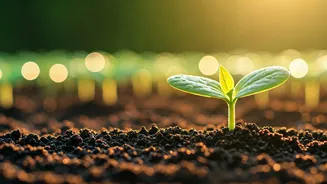
Embrace Small Joys
Moving beyond generic 'thankful for family' statements, which can lose their impact through repetition, is key to cultivating genuine appreciation. Instead,
tune into those subtle moments you might otherwise overlook. Think about the unexpected call from a friend checking in, a shared laugh after a tough week, the relief of concluding a demanding day, or a peaceful stretch of quietude free from anxiety. By connecting gratitude to specific, personal experiences, rather than abstract concepts, its emotional resonance deepens. These seemingly minor instances often hold profound significance and can be the bedrock of a more heartfelt practice of thankfulness.
Shift Your Perspective
Many people inadvertently defer their feelings of gratitude, believing they'll finally be able to appreciate life once certain milestones are met—a promotion, a healed heart, a desired relationship, or significant success. However, this approach often leads to a perpetual delay of satisfaction, as life's conditions for happiness can seem to constantly shift. A more effective strategy involves a mindful re-evaluation: ask yourself what you would profoundly miss if it were suddenly absent from your life. The answers often point to the ordinary, taken-for-granted aspects of existence, such as a loved one's presence, good health, restful sleep, or even the mundane routines that currently feel unremarkable. Cultivating gratitude flourishes when we cease treating the essential elements of our lives as if they are permanent fixtures.
Gratitude Beyond Tasks
The popular notion of gratitude as a simple act—jotting down a few things or thinking positively—often falls short, especially during arduous periods. For many, it can feel performative, monotonous, or even frustrating when life's pressures mount. True power in gratitude emerges not when it's treated as a chore, but when it fundamentally alters how you perceive your daily existence. It’s less about feigning contentment and more about actively seeking out what still possesses value, offers comfort, or holds meaning. The following practical approaches aim to integrate gratitude into your life in a way that feels authentic and deeply personal, moving beyond superficial gestures to foster genuine appreciation.
Express Appreciation Now
One of life's most poignant lessons is that the true importance of people often becomes apparent only after separation, change, or loss, making gratitude arrive too late. To circumvent this, instead of assuming your loved ones are aware of their significance, vocalize your appreciation while you have the opportunity. Whether it's directed at a friend, sibling, colleague, or parent, a simple, heartfelt acknowledgment like "I truly value your support" can have a far greater impact than you might imagine. Practicing gratitude outwardly, through direct expression, tends to foster a more enduring sense of thankfulness compared to keeping those sentiments solely within your thoughts.
Redefine Difficult Days
During times of intense struggle—be it burnout, grief, loneliness, or pervasive uncertainty—feeling grateful for grand achievements can seem utterly out of reach. On such challenging days, gratitude can and should be scaled down. Be thankful for simple acts of self-care, such as getting enough rest, managing to get through a particularly tough week, the nourishment of a meal, or simply the resilience to continue despite overwhelming exhaustion. These smaller acknowledgments are valid and significant. Authentic gratitude doesn't necessitate ignoring pain; rather, it involves recognizing that even amidst hardship, elements of goodness and positivity often persist and haven't entirely vanished.
Uncover Hidden Blessings
Complaints and frustrations can sometimes serve as unexpected indicators of underlying blessings that have become invisible due to familiarity. For instance, feeling discontent with your job might simultaneously signify the presence of financial stability. Similarly, being overwhelmed by family obligations could point to having people who care for you and depend on your presence. This perspective doesn't diminish the reality of struggles or advocate for romanticizing difficult circumstances. However, occasionally probing beneath the surface of your frustrations by asking, "What positive element exists beneath this challenge?" can reveal valuable aspects of your life that have been overlooked simply because they've become routine. People often lose appreciation for what they experience as commonplace.