





A 50-Year Wait
After a hiatus stretching over five decades since the Apollo 17 mission in 1972, humanity is poised to venture back towards the Moon. Artemis II represents
the first time a crew will journey beyond Earth's low orbit in this prolonged interval. This mission signifies a monumental step in resuming human presence in deep space, building on the legacy of the Apollo era and ushering in a new chapter of lunar exploration. The anticipation is palpable as NASA prepares to re-establish this critical human connection to our celestial neighbor, marking a significant milestone in spacefaring history.
Unprecedented Velocity
The Orion spacecraft, the vessel carrying the brave Artemis II astronauts, is engineered for incredible speed. During its journey, it will achieve velocities surpassing 24,000 miles per hour. This remarkable speed makes it the fastest human-crewed spacecraft ever designed to travel towards the Moon. Such velocity is crucial for efficient deep space transit, enabling the mission to cover vast distances in a relatively short time and fulfilling its ambitious objectives. The technological prowess behind this speed is a testament to advancements in propulsion and spacecraft engineering.
A Diverse Crew
The Artemis II mission is crewed by a quartet of highly skilled astronauts: Commander Reid Wiseman, Pilot Victor Glover, Mission Specialist Christina Koch, and Mission Specialist Jeremy Hansen. This selection is significant not only for their expertise but also for its representation. Victor Glover is set to become the first person of color to journey this far from Earth, while Christina Koch will be the first woman to venture beyond low-Earth orbit. Furthermore, Jeremy Hansen will make history as the first Canadian and non-American to undertake such a deep space voyage. This crew embodies a new era of inclusivity and international cooperation in space exploration.
Lunar Flyby Focus
Unlike the historical Apollo missions that culminated in lunar landings, Artemis II's primary objective is a sophisticated lunar flyby. The mission will involve the Orion spacecraft orbiting the Moon, allowing for critical system tests and observations without the complexities of a landing. This approach serves as a crucial precursor to future landing missions, enabling NASA to gather vital data and validate the performance of the Orion spacecraft and its associated technologies in the harsh lunar environment. It's a calculated step, prioritizing the thorough testing of capabilities before committing to a surface operation.
The Orion Vehicle
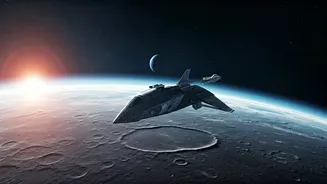
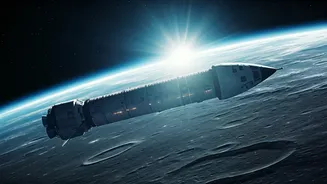
At the heart of the Artemis II mission is the state-of-the-art Orion spacecraft. This advanced vehicle has been meticulously designed for the rigors of deep space exploration. It incorporates cutting-edge life support systems to ensure the well-being of the crew during their extended journey. Additionally, Orion is equipped with a powerful propulsion system essential for navigating the vastness of space. Its robust construction and sophisticated technology are vital for the success of Artemis II and the broader goals of the Artemis program, which aims to establish a sustainable human presence beyond Earth.
The SLS Rocket
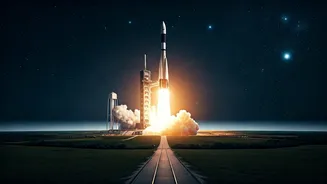
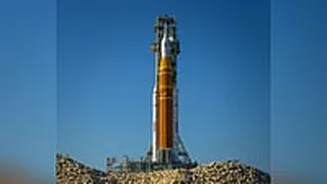
The colossal Space Launch System (SLS) rocket serves as the launch vehicle for the Artemis II mission. Recognized as the most powerful rocket ever developed by NASA, SLS is engineered to lift substantial payloads, including the Orion spacecraft and its crew, into deep space. Its immense power and advanced capabilities are indispensable for propelling astronauts on trajectories that extend far beyond Earth's orbit. The SLS rocket represents a significant leap in launch technology, paving the way for future ambitious space missions, including those to the Moon and Mars.
System Validation
A principal goal of the Artemis II mission is to rigorously test and validate the integrated systems of the Orion spacecraft within the challenging conditions of the lunar environment. This 'test drive' is fundamental to ensuring the spacecraft's reliability and readiness for subsequent missions, particularly those that will involve lunar landings. By experiencing real-world space conditions, NASA can gather invaluable data on performance, durability, and operational effectiveness. This thorough vetting process is critical for the safety of future crews and the ultimate success of the Artemis program's ambitious objectives.
Global Cooperation
The Artemis II mission proudly features an international collaboration with the inclusion of Canadian astronaut Jeremy Hansen. This partnership underscores NASA's commitment to fostering global cooperation in space exploration endeavors. By working together with international partners, space agencies can pool resources, share expertise, and achieve greater scientific and exploratory outcomes. Such collaborations not only advance technological capabilities but also strengthen diplomatic ties and promote a shared vision for humanity's future in space, benefiting all participating nations.
Mars' Gateway
The Artemis program, with Artemis II as its crucial initial crewed phase, is strategically designed as a vital stepping stone towards future human expeditions to Mars. The knowledge, technologies, and operational experience gained from lunar missions will be instrumental in preparing for the even more complex challenges of reaching and exploring the Red Planet. The insights into long-duration spaceflight, radiation mitigation, and deep space vehicle performance gathered during Artemis II will directly inform the planning and execution of future Mars missions, bringing humanity closer to becoming a multi-planetary species.
Inspiring the Future
Beyond its scientific and exploratory achievements, the Artemis II mission carries a profound purpose: to ignite inspiration in the next generation of scientists, engineers, and explorers. By showcasing humanity's continued pursuit of the cosmos, the mission aims to reawaken public fascination with space exploration. This renewed enthusiasm can foster greater interest in STEM fields, encouraging young minds to dream big and contribute to the future of discovery. The images and stories from Artemis II will undoubtedly fuel imaginations and inspire a legacy of innovation for decades to come.