





Lunar Base Ascendant
NASA is embarking on a transformative new chapter in its Artemis program, officially halting development of the lunar Gateway to concentrate its efforts
and substantial funding on establishing a permanent human base on the Moon. This strategic pivot, announced at NASA Headquarters, earmarks an impressive $20 billion to be invested over the next seven years, aiming to create humanity's first deep space outpost. This initiative signifies a profound commitment to sustained lunar operations, moving beyond short visits to establishing a long-term presence on the lunar surface. The focus is now squarely on building robust infrastructure and capabilities necessary for extended human exploration and scientific research directly on the Moon, marking a significant departure from previous orbital-centric plans. This bold move underscores a clear prioritization of surface-based activities and the foundational technologies required to support them.
Phased Lunar Construction
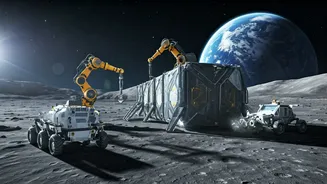
The ambitious plan for the lunar base is structured in three distinct phases, each with specific objectives and timelines. Phase 1, spanning from 2026 to 2028, is dedicated to ensuring dependable access to the Moon. This involves intensifying missions through programs like Commercial Lunar Payload Services (CLPS) and refining enabling technologies, alongside crucial "ground truth" data collection for potential base locations, particularly at the Moon's south pole. Phase 2, scheduled from 2029 through 2031, transitions into the construction of the base itself. This critical period will focus on deploying essential infrastructure, including robust communications and navigation systems, reliable power generation, and advanced logistics capabilities. Furthermore, it will see the development of larger CLPS cargo landers and support for a more frequent cadence of two crewed missions annually. Finally, Phase 3, commencing in 2032 and extending through at least 2036, is designed to unlock the potential for "long distance and long duration human exploration" on the lunar surface, facilitated by routine logistical supply missions and the development of uncrewed cargo return capabilities from the Moon. The financial commitment is substantial, with an estimated $10 billion allocated to both Phases 1 and 2, and an additional $10 billion or more projected for Phase 3.
Evolving Surface Mobility
While the lunar base project will leverage existing programs, some significant adaptations are underway to accelerate progress. The Lunar Terrain Vehicle program, for instance, is undergoing a revamp. NASA identified that the current approach to developing a crew-capable rover would extend deployment too far into the future, with initial projections for a surface delivery around 2030. In response, the agency is now seeking proposals for simplified rover designs that can be developed more rapidly and cost-effectively, with the flexibility to incorporate upgrades later. Beyond rovers, the base will also incorporate novel technologies. A prime example is MoonFall, an innovative drone concept inspired by the success of the Ingenuity helicopter on Mars. This lunar drone will be designed to hop between various locations on the Moon's surface, carrying lessons learned from Ingenuity's advanced avionics and systems to ensure its reliability and functionality in the challenging lunar environment. This focus on adaptable and cutting-edge mobility solutions is key to enabling effective exploration and operations.
Gateway's New Role
The significant reallocation of resources and focus towards the lunar base means that the Gateway, a previously planned orbital outpost around the Moon, is being paused in its current development form. NASA Administrator Jared Isaacman stated that this shift towards surface infrastructure for sustained lunar operations should not be surprising. While the Gateway's concept remains relevant for broader future exploration goals, it has been determined that it is not essential for achieving NASA's immediate primary objectives of establishing a lunar base. Recognizing the considerable investment already made, NASA intends to repurpose many systems developed for Gateway, such as the Power and Propulsion Element and the Habitation and Logistics Outpost, for use on the lunar base or other ongoing projects. Similar efforts will be made to reorient contributions from international partners, including Canada, Europe, Japan, and the United Arab Emirates, although specific details of these adjustments are still being finalized. This strategic pause allows NASA to concentrate its workforce, resources, and collective efforts on the critical surface infrastructure that is now the top priority.