





Arvari: Rajasthan's Revival
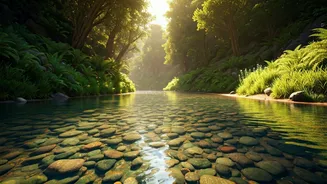
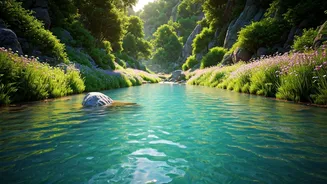
In the arid landscapes of Rajasthan's Alwar district, the Arvari River, spanning approximately 90 kilometers, stands as a testament to successful conservation.
Once a mere trickle, it has been revitalized through dedicated community efforts in water management. This remarkable transformation has turned the Arvari into a celebrated example of how local action can restore vital water sources, supporting biodiversity and the lives of those dependent on it. Its story is a powerful reminder of the significant impact even short rivers can have when nurtured.
Zuari: Goa's Coastal Vein
Flowing for about 92 kilometers, the Zuari River is a significant waterway in Goa, gracefully making its way to the Arabian Sea. This river is a cornerstone of the state's rich estuarine environment, playing a critical role in the delicate balance of its coastal ecosystems. Its presence influences marine life and coastal agriculture, highlighting how a relatively short river can be profoundly influential in its regional context. The Zuari's journey underscores the importance of coastal river systems.
Mandovi: Goa's Lifeline
Originating in the lush Western Ghats of Karnataka and extending about 77 kilometers, the Mandovi River is a crucial artery for Goa. This vital river not only nourishes the land it passes through but also serves as a major route for transportation, supports a thriving fishing industry, and is a significant draw for tourism. Its cultural and economic significance to Goa is immense, demonstrating that even a river of modest length can be the lifeblood of a region, facilitating commerce and sustaining livelihoods.
Aghanashini: Undammed Marvel
Boasting a length of 121 kilometers, the Aghanashini River in Karnataka holds a unique distinction: it flows unimpeded by major dams. This makes it a rare example of an undammed river in India, preserving its natural course and supporting a remarkably diverse array of aquatic life as it empties into the Arabian Sea. Its free-flowing nature contributes significantly to its ecological health and makes it a valuable natural asset for the region, showcasing the benefits of undisturbed river systems.
Sharavathi: Waterfall's Source
The Sharavathi River, measuring approximately 128 kilometers, is famously known as the source of the majestic Jog Falls, one of India's highest waterfalls. Flowing westward from its origins in the Western Ghats, this river carves a dramatic path through the landscape. Its most renowned feature, the thundering cascade of Jog Falls, draws attention to its powerful beauty and the significant role it plays in shaping the topography and natural spectacle of its region.
Palar: Seasonal Flow
The Palar River, with an active flow of around 93 kilometers, traverses through Karnataka, Andhra Pradesh, and Tamil Nadu. While its basin is extensive, its flow is primarily seasonal, making it a dynamic water source that responds to the monsoons. This river's fluctuating nature highlights the challenges and adaptations required for communities living along its banks, underscoring the cyclical relationship between water availability and local life in the region.
Meenachil: Kerala's Heartbeat
With a length of approximately 78 kilometers, the Meenachil River is a vital waterway in Kerala, ultimately draining into the expansive Vembanad Lake. This river is deeply intertwined with the agricultural practices and daily livelihoods of the local populations. Its waters are essential for sustaining crops and supporting the economic activities that define this vibrant region of Kerala, making it a cornerstone of local life and sustenance.
Kallada: Western Ghats' Gift
Flowing for about 121 kilometers, the Kallada River originates in the verdant Western Ghats and journeys to Ashtamudi Lake. This river is crucial for the region's development, serving as a primary source for irrigation projects that sustain agriculture and supporting hydroelectric power generation. Its contribution to both natural resource management and energy production underscores its multifaceted importance to the communities and economy of its basin.
Tunga: Pristine Tributary
As a significant tributary of the Tungabhadra, the Tunga River extends for roughly 147 kilometers. Emerging from the Western Ghats, it is celebrated for its remarkably clean waters and the serene, picturesque landscapes that flank its course. The Tunga's purity and scenic beauty make it a cherished natural asset, offering a tranquil environment and supporting the delicate ecosystems of its mountainous origin.
Netravati: Coastal Connector
Measuring around 103 kilometers, the Netravati River, though considered short, plays a crucial role in the coastal region of Karnataka. It flows into the Arabian Sea near the bustling city of Mangaluru, serving as an indispensable source of drinking water for the urban population and supporting agricultural needs in its vicinity. Its proximity to a major city highlights the vital, often overlooked, role short rivers play in urban and rural water security.