




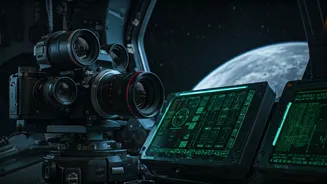


The Lunar Shadow
During the Artemis II mission, a natural consequence of orbital mechanics will cause a temporary loss of communication between the Orion spacecraft and
Earth. This event, scheduled for around 4:17 am IST on April 6, 2026, occurs as the spacecraft traverses the far side of the Moon. For approximately 40 minutes, the Moon's immense bulk will physically obstruct the direct path of radio and laser signals, which travel in straight lines. NASA's Deep Space Network, reliant on clear line-of-sight to maintain contact, will be unable to establish a link with Orion. This isn't a technical failure but a predictable outcome of the mission's trajectory, a calculated pause in communication that astronauts have prepared for, drawing on lessons from historical missions like Apollo, where similar experiences highlighted the psychological and operational aspects of deep space exploration.
Astronauts' Lunar Tasks
While out of contact, the four astronauts aboard the Orion spacecraft—Commander Reid Wiseman, pilot Victor Glover, and mission specialists Christina Koch and Jeremy Hansen—will have a unique opportunity to engage with their surroundings and conduct specific mission objectives. This period offers an unparalleled chance to observe the Moon's surface up close, potentially capturing detailed photographs and conducting preliminary geological analyses. Beyond these scientific endeavors, the astronauts will also be attending to other research tasks and operational checks. This deliberate downtime, though devoid of external communication, allows for focused introspection and a profound appreciation of their journey, where Earth recedes into a distant, precious point of light. It’s a chance to truly experience the vastness of space, unmediated by constant ground control chatter, reminiscent of the quiet solitude experienced by Apollo astronauts.
Echoes from Apollo
The communication blackout faced by Artemis II is not unprecedented; it mirrors experiences from the pioneering Apollo missions. Michael Collins, during his solo orbit of the Moon on Apollo 11, endured a 48-minute period of radio silence. In his own words, this isolation was profound, yet he described it not as frightening but as a moment of tranquil solitude. He found peace in being truly alone, a stark contrast to the constant stream of communication typically managed by mission control. Later reflections from Collins and other Apollo astronauts highlighted how these quiet intervals provided a welcome respite, allowing for personal reflection and a deeper connection with the mission's purpose. Pilot Victor Glover has also spoken about embracing this quiet time, suggesting it as an opportunity for sending positive thoughts and hoping for a unified global sentiment during the brief disconnection.
Earth's Watchful Wait
Back on Earth, the loss of contact is keenly felt, not just by mission control but by a global audience watching the progress of this historic endeavor. Ground stations, like the Goonhilly Earth Station in Cornwall, equipped with sophisticated antennas, play a crucial role in tracking the Orion spacecraft and relaying vital data. For the teams managing these operations, the moments leading up to and immediately following the communication blackout are filled with a mixture of tension and anticipation. Chief Technology Officer Matt Cosby of Goonhilly noted the significance of tracking a human-crewed spacecraft and the expected nervousness as it disappears behind the Moon, followed by immense excitement and relief upon re-establishing contact. This shared experience underscores the human element of space exploration, where the safety and success of the crew are paramount, fostering a sense of global unity and shared aspiration.