






The Interrupted Filter
Instead of feeling refreshed, you might wake up feeling like you've just returned from an epic, albeit bizarre, journey. It's a common thought that a poor
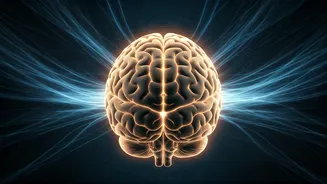
night's sleep means you've been dreaming non-stop. However, neuroscience offers a different perspective: it's not necessarily that you're dreaming more, but rather that your brain is failing to perform its usual dream-erasing function. Experts in sleep medicine explain that what we perceive as "vivid dreaming" during a night of tossing and turning is actually a consequence of your sleep being disrupted. Normally, when sleep is deep and uninterrupted, the fleeting electrical signals of your dreams are not stored in your long-term memory and are effectively forgotten by morning. Continuity in sleep is key to this natural deletion process.
The Memory Gateway Mechanics
The ability to recall dreams is directly linked to when you wake up. According to sleep specialists, individuals are more prone to remembering their dreams if they happen to awaken during a Rapid Eye Movement (REM) sleep phase. In a healthy sleep pattern, the transition from the dream-rich REM stage to wakefulness is a gradual process, cushioned by other sleep stages. However, when sleep is fractured and inconsistent, the brain is abruptly pulled out of its cycle. Imagine being pulled away from your desk while you're still actively working on a document; the 'files' are still open. When you wake up before your brain has had the chance to 'delete' the dream, fragments of it are successfully transferred into your conscious memory, making them accessible and memorable.
The Logic Gap Explained
This phenomenon also sheds light on why dreams experienced during a restless night often feel so remarkably lifelike and even haunting. During REM sleep, the parts of the brain responsible for processing emotions and visuals – specifically the amygdala and the occipital lobe – are highly active. Concurrently, the prefrontal cortex, which is the brain's center for logic and critical thinking, is significantly less engaged, almost offline. As explained by neurology experts, the emotional and visual centers are working overtime, even while the body remains completely still. In the absence of the brain's logical 'editor' to highlight the nonsensical aspects of a dream's narrative, these visions are perceived as immersive and surprisingly convincing. Each time you wake up repeatedly during the night, you're exposed to these raw, unfiltered emotions and scenarios, contributing to the feeling that the night was lived rather than slept.
Morning REM Crescendo
The timing of your wakefulness throughout the night significantly influences dream recall. Sleep is not a uniform state; it unfolds in a series of cyclical phases. As the night progresses, the duration of deep, restorative sleep tends to decrease, while periods of REM sleep, where most vivid dreaming occurs, tend to lengthen. By the time the early morning hours arrive, your brain is dedicating a substantial amount of its activity to the dream state. If your body's natural sleep-wake cycle, or circadian rhythm, is disrupted – perhaps due to stress, exposure to blue light from screens, or an irregular routine – you are much more likely to regain consciousness during these extended REM phases, thereby increasing your chances of remembering your dreams.
Retention, Not Production
The central paradox of experiencing a night filled with vivid dreams due to poor sleep is that your brain isn't necessarily becoming more creative or imaginative. Instead, it's being caught in the act of normal dreaming processes that are no longer being effectively filtered. As noted by neurology professionals, a night of bad sleep doesn't automatically equate to dreaming more. Rather, it primarily means that you are remembering more of the dreams that do occur. Ultimately, a night filled with what feels like exceptionally vivid dreaming isn't an indicator of an overactive imagination. Instead, it's a sign that your brain's natural 'filter' for discarding dreams has been compromised. You aren't dreaming more; you are simply awake during the segments of sleep that were intended to be forgotten.