







The Dawn of Ultra-Long Flights
Get ready for an aviation revolution as Qantas launches its Project Sunrise, set to introduce the longest non-stop passenger flights ever operated. These
ambitious routes will connect Sydney to global hubs like London and New York, covering over 10,000 miles and lasting approximately 22 hours. This groundbreaking initiative aims to eliminate traditional refuelling stops, potentially shaving up to four hours off current travel times. The specially configured Airbus A350-1000ULR aircraft, equipped with extended fuel tanks and powered by Rolls-Royce Trent engines, are designed for these extreme distances. The project, born from a desire to conquer Australia's historic "tyranny of distance," promises to fundamentally transform how people experience ultra long-haul travel, prioritizing passenger well-being and minimizing the debilitating effects of jet lag through science-backed design.
Chasing Daylight Twice
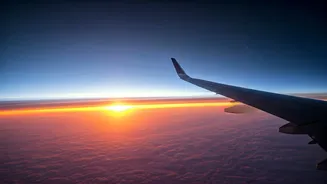
The captivating name 'Project Sunrise' is directly inspired by a unique phenomenon passengers will experience: witnessing the sun rise not once, but twice during a single flight. These flights are meticulously planned to depart Sydney in the late evening, flying westward across vast continents and time zones. As the aircraft essentially 'chases' the daylight, passengers will observe the dawn break, and then, due to the plane's trajectory and speed, experience another sunrise as they approach their destination in Europe or North America. This dual-sunrise spectacle harks back to historical endurance flights from World War II, where similar long missions also resulted in seeing two dawns, making it a defining and unforgettable aspect of this new era of ultra-long-distance air travel.
Innovations for Well-being
To mitigate the physical and mental toll of an almost day-long journey, Qantas has collaborated with experts from the Charles Perkins Centre at the University of Sydney. Their research has directly influenced cabin design, focusing on reducing fatigue and jet lag. Passengers can look forward to intelligently designed lighting systems that mimic the distinctive light of the Australian Outback, and meal services strategically timed to align with natural circadian rhythms, aiding acclimatization to new time zones. Furthermore, a unique 'wellness zone' situated at 35,000 feet will offer self-serve healthy refreshments to maintain hydration, alongside space for stretching and light exercise. Large screens will guide passengers through stretching routines, and integrated exercise handles on the walls will support movement, creating a tranquil space akin to a 'yoga studio in the sky' or a communal area for relaxation and social interaction.
A Redesigned Cabin Experience
The interior of the Project Sunrise aircraft has been meticulously crafted by designer David Caon, balancing aesthetic appeal with critical engineering requirements like weight, safety, and maintainability. A key feature is the significantly reduced seat density compared to standard aircraft. The A350-1000ULR will accommodate 238 passengers, a notable decrease from typical configurations, allowing for more personal space. This configuration includes 6 First-Class suites, 52 Business suites, 40 Premium Economy seats, and 140 Economy seats, all designed with enhanced comfort in mind. High-speed Wi-Fi will be provided at no extra cost, ensuring connectivity throughout the flight, further enhancing the passenger experience on this pioneering long-haul route.
From Multi-Day to Single Flight
This forthcoming journey marks a stark contrast to the early days of air travel between Australia and Europe. Historically, the famed "Kangaroo Route" in the 1940s involved multi-day voyages on Lockheed Constellation aircraft, necessitating numerous stops in cities like Darwin, Singapore, Calcutta, Karachi, Cairo, Tripoli, and Rome, often including overnight stays. Those early flights, while groundbreaking for their time, were characterized by four-engine propeller planes, cramped cabins, and considerable noise, making them a far cry from the comfort expected today. Now, a trip that once spanned four to five days will be completed in less than one, showcasing the dramatic evolution of aviation and the immense progress made in achieving seamless, ultra-long-distance travel.