






A Growing Legacy
As of 2026, India proudly boasts 44 UNESCO World Heritage Sites, a remarkable collection comprising 36 cultural, 7 natural, and 1 mixed site. This significant
number places India sixth globally in terms of recognized heritage, underscoring its profound historical and cultural depth. These sites are scattered across virtually every region of the nation, acting as gateways to over 4,000 years of Indian civilization. They narrate tales through an array of architectural marvels, including ancient temples, imposing forts, mysterious caves, ingenious stepwells, historic railways, meticulously planned cities, and the remnants of age-old settlements, each offering a unique glimpse into India's enduring past.
Ancient Roots Uncovered
India is the cradle of one of the world's most ancient and continuous civilizations, yet often, global recognition tends to focus on iconic landmarks like the Taj Mahal. However, the UNESCO list reveals a far grander and more expansive narrative. This journey stretches back over 4,000 years to the Harappan city of Dholavira in Gujarat, one of the largest known settlements from the Indus Valley Civilization. It also extends to more recent recognitions, such as the royal Moidams burial mounds of Assam, which in 2024 became the first cultural UNESCO site from Northeast India, highlighting a broader historical and geographical representation of India's heritage.
The Dawn of Recognition
India's official engagement with UNESCO's World Heritage list commenced in 1983, a significant year that saw four of the country's most iconic landmarks inscribed simultaneously. These inaugural sites—the Taj Mahal, Agra Fort, Ajanta Caves, and Ellora Caves—marked the beginning of a long and illustrious journey. This foundational recognition laid the groundwork for the extensive collection that has since grown to encompass 44 diverse heritage sites. These treasures are distributed across 18 different states and union territories, each contributing a unique facet to India's rich tapestry of history and culture.
Caves of Wonder
Among India's most awe-inspiring UNESCO sites are the Ajanta and Ellora Caves in Maharashtra. These two extraordinary rock-cut complexes, separated by a considerable distance and time, offer profound insights into India's artistic and religious history. The Ajanta Caves are renowned for their ancient Buddhist paintings and monastic structures, with origins dating back over two millennia, providing a vivid window into early Buddhist art and life. In contrast, the Ellora Caves present a unique panorama of religious harmony, housing magnificent monuments dedicated to Buddhism, Hinduism, and Jainism within a single, vast site, reflecting a remarkable era of coexistence and mutual respect among different faiths.
Southern Temple Grandeur
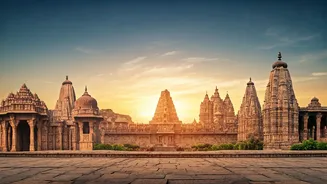
The southern regions of India contribute significantly to the nation's UNESCO World Heritage roster, showcasing some of the finest examples of temple architecture globally. The 13th-century Konark Sun Temple in Odisha stands as a monumental testament to the artistry of stone carving, depicting the celestial chariot of the sun god. Further south, Tamil Nadu's Great Living Chola Temples are spectacular demonstrations of the engineering prowess and artistic vision of the Chola Empire. More recently, in 2023, the Hoysala temples, located in Belur, Halebid, and Somnathapura in Karnataka, were added to the list, celebrated for their unique fusion of various architectural styles and intricate sculptural detailing.
Mughal Magnificence
The Mughal period holds a prominent place in India's UNESCO World Heritage narrative, reflecting a zenith of imperial architecture and design. Humayun's Tomb in Delhi, erected in 1570, is historically significant not only as a tomb but also as a precursor and inspiration for the iconic Taj Mahal's design. The Red Fort in Delhi, a colossal sandstone fortress, symbolizes the peak of Mughal imperial power and architectural grandeur in the 17th century. Fatehpur Sikri, established as the empire's grand capital, though short-lived, its brief 14-year existence as a functioning city left behind an enduring legacy of magnificent palaces and mosques, showcasing innovative urban planning and artistic fusion.
Colonial and Modern Visions
India's colonial past and modern developmental milestones are also well-represented among its UNESCO sites. Mumbai alone is home to several significant designations, including the Chhatrapati Shivaji Terminus, a historic railway station showcasing Victorian Gothic architecture, and the city's broader Victorian Gothic and Art Deco Ensemble, highlighting a unique urban architectural blend. Chandigarh's Capitol Complex, a modernist masterpiece designed by the visionary architect Le Corbusier, is part of a rare global UNESCO recognition shared by only 17 of his projects worldwide, underscoring its international architectural significance.
New Frontiers Recognized
Recent UNESCO inscriptions have broadened the scope of recognition into emerging regions and historical periods, enriching India's heritage narrative. Dholavira, incorporated in 2021, offers invaluable insights into the sophisticated urban planning and water management of the Indus Valley Civilization, over 4,000 years ago. Assam's Moidams gained entry in 2024, representing a significant cultural addition from Northeast India. Furthermore, the Maratha Military Landscapes, a network of 12 historic forts that played crucial roles in the Maratha Empire's defense and expansion, were recognized in 2025, highlighting a vital chapter in India's military history.
Living Heritage Endures
Not all UNESCO sites in India are static relics of the past; many continue to thrive as living centers of culture and activity. Santiniketan in West Bengal, established by the Nobel laureate Rabindranath Tagore, remains a vibrant and active educational and cultural institution, embodying a unique philosophy of education. The Mountain Railways of India, including the iconic Darjeeling Himalayan Railway, the Kalka-Shimla Railway, and the Nilgiri Mountain Railway, are remarkable feats of engineering that continue to operate more than a century after their construction, offering scenic journeys through stunning landscapes.
A Tapestry of Civilization
Collectively, India's 44 UNESCO World Heritage Sites signify more than just architectural or historical achievements. They represent vibrant, living entities—active temples, functioning railways, inhabited cities, and dynamic cultural spaces that continue to evolve. From the spiritual depths of Buddhist monasteries and Hindu temples to the imperial grandeur of Mughal forts, the strategic importance of Maratha fortresses, and the innovative spirit of colonial and modern urban planning, these sites weave together the multifaceted story of one of the world's most enduring and layered civilizations.