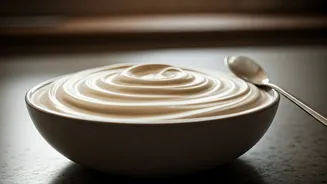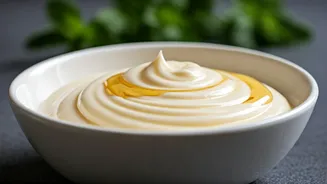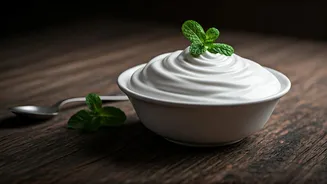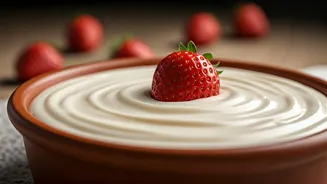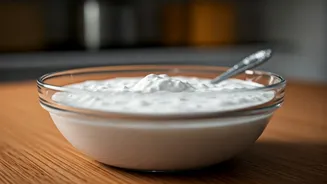

Why Homemade Curd?
Embracing homemade curd offers a wealth of health benefits and cost savings. Store-bought options often contain preservatives and additives that can be detrimental
to long-term health. Furthermore, consistently purchasing curd can become a significant expense. Opting for homemade ensures you control the ingredients, making it a healthier and more economical choice, especially as summer approaches and the demand for cooling foods increases. Making curd at home liberates you from artificial enhancers and allows you to enjoy a pure, nutritious dairy product tailored to your liking. It's a simple yet powerful way to incorporate a probiotic-rich food into your daily diet, supporting overall well-being and digestion without compromising on taste or quality.
The Lemon Juice Method
This method leverages the natural acidity of lemon juice to initiate the curdling process. By adding the juice of half a lemon to a liter of whole milk, you introduce an acidic environment that encourages the milk proteins to coagulate. The result is a thick curd with a pleasant, slightly tangy flavor profile. This technique is straightforward and relies on a common kitchen ingredient to achieve a desirable texture and taste, making it an accessible option for beginners. The tanginess introduced by the lemon is generally mild, offering a nuanced flavor that complements many dishes without overpowering them. It's a testament to how simple natural elements can transform milk into a delightful dairy product.
The Green Chilli Technique
For those seeking an alternative starter, the green chilli method utilizes the inherent lactobacillus bacteria present on the chilli's surface. By adding a whole green chilli, or one with its top portion removed, to the milk, you introduce these beneficial microorganisms that facilitate curd formation. While this method results in a well-set curd, it may be slightly thinner compared to the lemon juice approach. Importantly, there's no discernible chilli flavor imparted to the final product, making it a safe and effective option for those concerned about spice. This natural inoculation method highlights the diverse sources of helpful bacteria available in our kitchens.
The Classic Starter Method
The most traditional and often considered the most reliable way to make curd involves using a small amount of existing curd as a starter culture. This starter is rich in active cultures, guaranteeing a consistent and predictable fermentation process. The resulting curd boasts a perfect texture and a familiar, comforting taste, making it a foolproof method for both novice and experienced curd makers. The presence of active bacterial colonies in the starter is key to its efficacy, ensuring a robust and timely setting of the milk into dahi. This method is favored for its predictability and the classic flavor it delivers, making it a staple in many households.
Optimizing Curd Consistency
To achieve an exceptionally thick curd, start by boiling a liter of whole milk and then simmering it on low heat until it reduces and thickens. Allow the milk to cool slightly, but not completely, before frothing it vigorously. This can be done by repeatedly pouring the milk between two vessels. Once frothed, incorporate your chosen curd culture and gently toss it through the milk. Transfer this mixture to a thick-bottomed bowl, casserole, or an earthen pot, cover it with a lid, and leave it in a warm place to set for 5 to 8 hours, or overnight, depending on the ambient temperature. Promptly refrigerating the curd once it has set helps maintain its firm texture and prevents it from becoming watery.
Key Do's and Don'ts
For the thickest curd, always opt for whole milk and consider simmering it for an additional 10 minutes to increase its solids content, being careful not to scorch it. Ensure your starter curd is fresh and at room temperature before adding it; use between one teaspoon and one tablespoon per liter of milk. Frothing the milk before adding the starter is crucial for achieving a thicker consistency. Avoid using sour starter curd, as this will result in sour homemade dahi. It's essential to dissolve the starter uniformly into the milk by whisking thoroughly. Earthen pots are excellent for setting curd due to their porous nature. In colder climates, place the setting curd in an oven or wrap it in warm blankets to aid fermentation. Remember that milk quality significantly impacts curd consistency, and it may take a few attempts to perfect your home-making technique.