





5G in Space
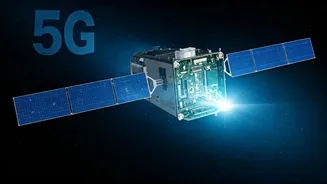
The recent completion of initial 5G tests by Tyvak International's LIDE satellite signifies a leap in the integration of advanced communication technology
in space. These preliminary on-orbit experiments were conducted to evaluate the feasibility and performance of 5G networks in a space-based environment. The LIDE satellite, equipped with advanced communication payloads, served as the testbed. During the tests, researchers assessed critical aspects such as signal strength, latency, and overall network performance. The data gathered provides crucial insights into how 5G can be successfully deployed and utilized for various applications in space, opening up new possibilities for satellite communication, remote sensing, and other space-based services. The success of these initial tests will greatly inform the development of future space-based 5G infrastructure.
Guowang and Launch Plans
The context also includes the mention of Guowang batch 18, which is tied to the upcoming launch plans. Furthermore, the first launches of 2026 are slated to send Yaogan spacecraft into an unusual orbit, along with Guowang satellites. These launches are crucial for the development of space-based networks and applications. The Yaogan spacecraft's placement in an uncommon orbit suggests a specific mission profile aimed at enhanced observation capabilities. Guowang satellites, in conjunction with these launches, contribute to China's strategy for space-based connectivity and data gathering. The focus on both spacecraft and satellites within the launch plan shows an integrated strategy, where various elements cooperate to broaden China's space capabilities in fields like remote sensing, data transmission, and communications. The planned execution of these launches underscores the ongoing advancements and strategic goals in the space domain.
SDA TAP Lab
Alongside the 5G tests and launch plans, the context mentions the SDA TAP Lab, a mini-accelerator program designed to support innovation within the space sector. Applications are open for Cohort 4 of the SDA TAP Lab, known as Catalyst Campus. This program is instrumental in fostering growth and development within the space industry. The program provides vital resources, including mentorship, training, and funding opportunities, aimed at propelling innovative concepts and technologies. The availability of resources for the SDA TAP Lab demonstrates the industry's commitment to supporting new ventures. With the inclusion of the Catalyst Campus mini-accelerator, the context expands to encompass support for emerging companies and initiatives within the space sector, illustrating the sector's ecosystem.
Autonomous Space Operations
Turion Space Corp's acquisition of Tychee Research Group marks a significant step towards accelerating autonomous space operations. This move is designed to integrate the expertise and technology of both companies. The primary goal of this acquisition is to enhance mission engineering capabilities and speed up advancements in space operations. This acquisition is critical as it indicates a trend of increased investment in autonomous technologies. By integrating Tychee Research Group's expertise, Turion Space Corp. will enhance its capabilities in designing and executing complex space missions. This approach highlights the importance of collaboration and knowledge sharing within the space industry, which seeks to boost efficiency, capabilities, and the overall pace of innovation in space technology.