







Rice Selection Matters
The foundation of an exceptional biryani lies in the rice you choose. Opt for long-grain basmati rice; its natural fragrance and tendency to remain separate
after cooking are paramount for achieving that signature fluffy texture. Before you even think about cooking, a thorough washing and soaking of the rice is a non-negotiable step. This process effectively removes excess starch, which is vital for ensuring each grain cooks evenly and maintains a light, airy consistency, preventing the dreaded clumping that can mar an otherwise perfect biryani.
Marination Mastery
To imbue your meat with unparalleled succulence and depth of flavor, a meticulous marination process is essential. A well-crafted marinade typically involves a base of yogurt, a potent blend of aromatic spices, a smooth ginger-garlic paste, and fresh herbs. Allowing the meat to absorb these flavors for several hours, or ideally, overnight, works wonders. This extended period not only tenderizes the meat to a melt-in-your-mouth consistency but also ensures that every single bite is infused with a rich, complex, and captivating taste profile, making the meat the star of your biryani.
Spice Harmony
Biryani's soul lies in its exquisite spice blend, featuring classics like cardamom, cloves, cinnamon, and bay leaves. The art isn't in using copious amounts of spices, but in achieving a delicate balance. The goal is to create a harmonious symphony of flavors where each spice complements the others, rather than overpowering the dish. Employing freshly ground spices will significantly elevate the aromatic quality and taste, ensuring a rich fragrance that enhances, rather than masks, the inherent flavors of the other ingredients, contributing to a more nuanced and satisfying experience.
Separate Cooking
For an optimal outcome, it's highly recommended to cook the rice and meat components of your biryani separately before combining them. This technique allows you to precisely control the cooking time and texture of each element. By partially cooking the rice and preparing the meat beforehand, you guarantee that both are perfectly done. This approach effectively prevents common pitfalls such as overly mushy rice or undercooked meat, ensuring that the final biryani is a textural triumph, with distinct yet complementary components.
The Art of Layering
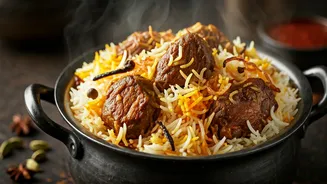
The meticulous layering of rice and meat is a fundamental technique that defines the characteristic taste of biryani. Alternate layers of the partially cooked rice with the prepared meat, interspersed with elements like golden fried onions, fresh herbs, a vibrant saffron-infused milk mixture, and a drizzle of ghee. This deliberate arrangement allows the diverse flavors to meld and deepen gradually throughout the cooking process, ensuring that each spoonful offers a delightful and intricate combination of aroma, varied textures, and profound richness.
Embrace Dum Cooking
The traditional 'dum' cooking method, which involves slow steaming, is paramount for sealing in the exquisite aromas and flavors of biryani. Securely seal the pot, typically with dough or a tight-fitting lid, and cook over very low heat. This gentle, prolonged cooking process allows the ingredients to steam and infuse into one another, creating a depth of flavor and an irresistible fragrance that is characteristic of authentic biryani. Mastering the dum technique is key to achieving that genuine, deeply satisfying biryani experience.
Resting is Key
Patience is a virtue when it comes to biryani. Once the cooking is complete, resist the urge to serve immediately. Allowing the biryani to rest for a period of 10 to 15 minutes before dishing it out is a crucial final step. This resting phase is vital as it permits the complex flavors to settle and harmonize, and the distinct layers to firm up slightly. Consequently, this leads to a more cohesive texture and significantly enhances the overall taste and aromatic profile of the finished dish, making it a truly memorable culinary creation.