




Fabric & Wealth Indicators
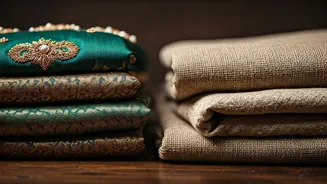
The most striking divergence between the attire of ancient India's elite and its populace was undoubtedly the fabric employed. Royalty adorned themselves
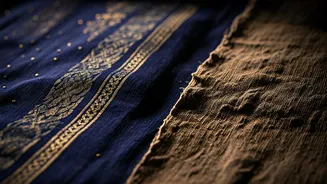
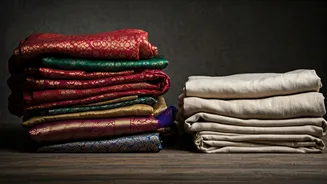
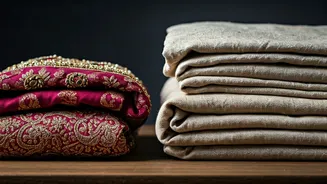
in luxurious materials such as fine silks, including varieties like kauseya, delicate muslins, and elaborately woven brocades. During prominent eras like the Maurya and Gupta empires, trade routes facilitated the procurement of imported textiles, and the incorporation of zari work, which involved threads of gold or silver, alongside perfumed fabrics, was a hallmark of royal fashion. In contrast, the common people's clothing consisted of simpler, more functional garments crafted from robust cotton. These ensembles were designed for durability and practicality, often featuring minimal dyeing and a straightforward construction, reflecting a focus on necessity over ostentation.
Embellishments & Ornamentation
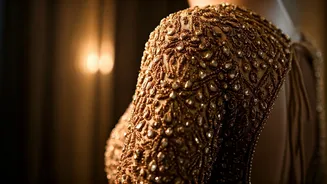
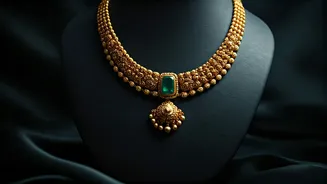
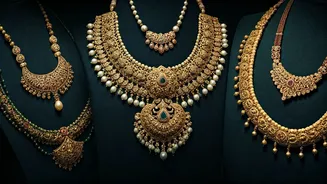
The visual narrative of status extended significantly to the embellishments and decorative elements of ancient Indian clothing. Royal garments were a testament to grandeur, rarely appearing plain. They were meticulously adorned with extensive gold thread detailing, often interspersed with precious gemstones that would catch the light. Intricate borders, elaborate motifs, and decorative sashes or statement waistbands were commonplace, adding layers of opulence and visual richness. For the commoners, however, such lavish embroidery was absent. Their attire typically featured simpler finishes, such as basic hemline stitches. Any form of decorative prints or embroidery was generally reserved for special occasions like festivals, indicating that daily wear for the populace prioritized simplicity and function over elaborate adornment.
Color Palettes & Significance
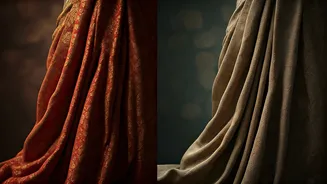
Color played a pivotal role in conveying status and wealth within ancient Indian fashion. The royal spectrum was dominated by deep, saturated hues like rich reds, vibrant saffron, radiant gold, and deep royal blues. These intense colors were achieved using natural dyes derived from sources such as indigo and madder, and their vibrancy was a direct symbol of affluence and prestige. Commoners, on the other hand, generally favored muted, earthy tones. Their clothing often consisted of undyed cotton, showcasing the natural color of the fabric, or was dyed with lighter, less intense shades. This preference for subdued colors underscored a simpler lifestyle, contrasting sharply with the bold and vibrant displays of the ruling class.
Draping, Layers, & Purpose
The style and construction of ancient Indian clothing heavily relied on draping and layering, with unstitched garments being prevalent. Royal attire often featured a dhoti or antariya, a lower garment, with meticulously crafted decorative pleats. This was complemented by an uttariya, an upper drape made from fine silk, and potentially multiple layers of stoles, scarves, and sashes, all contributing to an overall sense of grandeur and presence. As time progressed, stitched garments gradually became more common even for the elite. Commoner attire typically involved simpler drapes, such as calf-length saree-style garments for women and basic dhotis for men, often accompanied by a short upper cloth. The number of layers was usually less pronounced, partly due to the prevailing hot climate. Ultimately, royal clothing aimed for volume and visual impact, commanding attention, while commoners' attire prioritized ease of movement and comfort for daily activities.