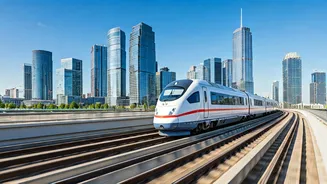

RRTS: A New Era
The Regional Rapid Transit System (RRTS) signifies a monumental shift in India's urban mobility landscape. The initiative goes beyond traditional public
transport, offering high-speed, high-frequency rail services designed to connect regional centers and reduce travel times significantly. The RRTS aims to provide a reliable, efficient, and comfortable mode of transport, encouraging people to opt for public transit over private vehicles, thereby alleviating traffic congestion and minimizing carbon emissions. The system focuses on improving accessibility, enhancing regional integration, and promoting sustainable development by integrating various modes of transport such as metro lines and bus services. This strategy is expected to facilitate seamless commuting experiences for commuters, fostering better connectivity and ultimately fueling economic activity. The RRTS represents a modern transportation solution that is critical for managing the increasing demands of a rapidly urbanizing nation.
Transforming Urban Mobility
The primary objective of the RRTS is to drastically improve urban mobility across different regions. By providing fast and frequent train services, the system seeks to drastically reduce travel times between cities. This increased speed and efficiency will be particularly beneficial for daily commuters and business travelers, and will increase the productivity of the workforce by reducing the time spent traveling. Improved mobility also helps to expand economic opportunities, allowing people to access employment, education, and healthcare more easily. The RRTS is designed with user convenience in mind, featuring advanced technologies such as automated ticketing systems and comfortable seating arrangements to boost the overall commuter experience. Furthermore, the system includes steps to integrate with existing public transportation networks, making it simple to switch between different modes of transport, thereby contributing to a seamless and unified transport infrastructure.
Boosting Economic Growth
Beyond its impact on mobility, the RRTS is expected to have a significant positive impact on economic growth in the regions it serves. The improved connectivity facilitated by RRTS is likely to encourage business investments and economic activity in areas surrounding the transit lines. By shrinking travel times, the system makes it simpler for businesses to connect with customers, suppliers, and partners, increasing trade and investment opportunities. Property values in locations adjacent to RRTS stations are also likely to increase, offering benefits for landowners and investors. The project will generate substantial employment prospects during construction and operation, boosting local economies. The government's investment in the RRTS, combined with the resultant growth, could help foster a more inclusive and sustainable economic landscape in India.
MSME Growth Support
In conjunction with the infrastructure development of the RRTS, the government has shown a commitment to bolster the growth of Micro, Small, and Medium Enterprises (MSMEs). MSMEs are a crucial element of the Indian economy, driving innovation, employment, and economic diversification. The government's backing for MSMEs includes financial incentives, easier access to credit, and supportive policies meant to boost their competitiveness. The RRTS project provides chances for MSMEs to participate in supply chains, offering prospects in construction, manufacturing, and services related to the project. The synergy between the RRTS and MSME development is expected to foster balanced regional growth, ensuring economic benefits are spread widely across different sections of society. This comprehensive strategy shows a commitment to not only building modern infrastructure but also strengthening the economic foundations of the nation.