







A Realm of Floating Wonders
Loktak Lake, often hailed as the 'Jewel of Manipur,' stands as a testament to nature's ingenuity, being the only national park in the world to feature
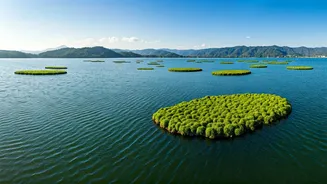
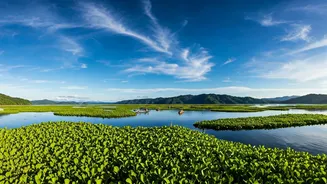
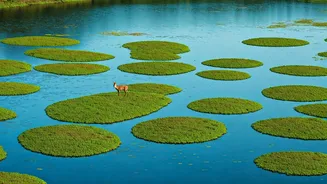
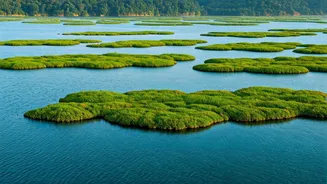
a floating ecosystem. Its most striking characteristic is the presence of 'Phumdis' – heterogeneous masses of vegetation, soil, and organic matter that decompose in water. These Phumdis are not static; they drift across the lake, creating a dynamic and ever-changing landscape. The lake itself is the largest freshwater lake in Northeast India, vital for the region's ecological balance and the livelihoods of its inhabitants. These floating islands vary in size, with some large enough to support entire villages and agricultural activities, showcasing an incredible adaptation of human life to a unique natural environment.
Biodiversity's Floating Haven
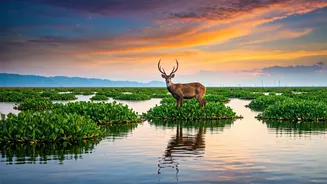
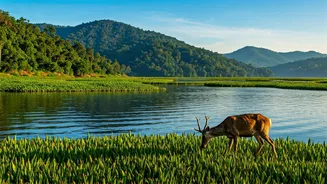
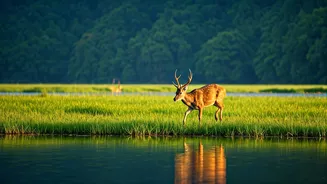
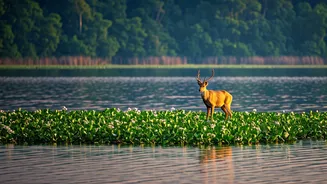
The Phumdis of Loktak Lake are not merely floating landmasses; they are intricate ecosystems teeming with life. They provide a crucial habitat for a remarkable array of flora and fauna. The submerged parts of the Phumdis offer sustenance and shelter to numerous fish species, some endemic to the region, supporting the local fishing communities. Avian life also thrives here, with the lake serving as an important stopover for migratory birds and a permanent home for resident species. The rich vegetation of the Phumdis is instrumental in maintaining the lake's water quality and supporting the complex food web. Rare species, including the endangered Sangai deer (Manipur's dancing deer), have historically found refuge in the dense cover provided by these floating islands, highlighting the park's importance for conservation efforts.
Life on the Water's Embrace
The human element is inextricably linked to the existence of Loktak Lake and its floating Phumdis. For generations, the local communities, particularly the fishermen, have lived in harmony with this unique environment. They have ingeniously constructed their homes and livelihoods on and around these floating islands. 'Phumshongs,' or artificial Phumdis made from interwoven vegetation, are created to cultivate crops and provide a stable base for dwellings. This symbiotic relationship underscores a deep understanding of the lake's natural rhythms. However, this delicate balance is also subject to pressures from human activities and environmental changes, making conservation and sustainable management of the lake a critical ongoing endeavor for preserving its unique heritage and ecological significance.