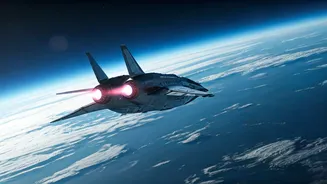

VLEO's Attractive Benefits
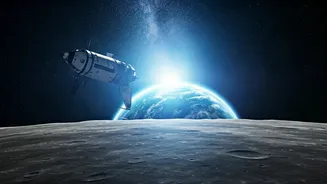
Venturing into Very Low Earth Orbit (VLEO) presents an array of exciting advantages, making it an increasingly attractive prospect for spacefaring endeavors.
The primary benefit lies in the dramatic reduction of launch costs. The lower altitude of VLEO, typically between 150 to 300 kilometers, requires significantly less energy to reach compared to higher orbits. This translates to a considerable cut in fuel consumption, ultimately driving down the overall expense of launching satellites and other payloads. Moreover, the proximity to Earth in VLEO facilitates easier and faster communication, leading to reduced latency and enhanced data transmission speeds. This is crucial for applications such as Earth observation, where real-time data analysis is vital. In addition, the shorter distances in VLEO allow for the utilization of smaller, more affordable satellites, expanding accessibility to space for various organizations and research institutions. The cost-effectiveness and efficiency improvements of VLEO position it as a significant shift in the economics of space exploration, opening up novel possibilities for future missions and projects in the cosmos.
Atmospheric Drag's Impediment
Despite the undeniable advantages of Very Low Earth Orbit, one substantial impediment presents itself: atmospheric drag. At these low altitudes, the Earth's atmosphere, albeit thin, exerts a considerable drag force on spacecraft. This friction, a result of the spacecraft's interaction with atmospheric particles, gradually slows down the satellite, leading to a loss of altitude. This necessitates the implementation of complex orbital maintenance strategies. Constant adjustments using onboard propulsion systems are required to counteract the drag and prevent the satellite from re-entering the Earth's atmosphere. The severity of atmospheric drag is directly proportional to the density of the atmosphere and the spacecraft's velocity and surface area. Therefore, managing this persistent drag presents an ongoing challenge for VLEO missions, requiring innovative solutions that extend the operational lifespan of satellites and reduce the frequency of costly maintenance maneuvers. The effectiveness of drag mitigation techniques will significantly influence the viability and long-term sustainability of VLEO as a practical orbital destination.
Thruster Innovation Unveiled
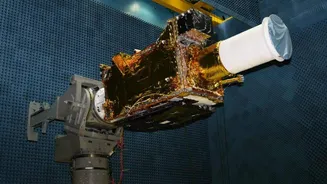
To address the challenges posed by atmospheric drag and to maximize the benefits of VLEO, cutting-edge thruster technologies are playing a pivotal role. Electric propulsion systems, particularly Hall-effect thrusters and ion drives, have become increasingly prominent. These thrusters accelerate propellant using electric fields, achieving higher fuel efficiency compared to traditional chemical rockets. This enhanced efficiency is essential for VLEO missions, where frequent adjustments are needed to counter drag. Moreover, advancements in micro-propulsion systems, designed for small satellites, offer an alternative for maintaining orbit. These compact and lightweight thrusters are specifically optimized for the constraints of VLEO applications. The development of advanced propellants, such as xenon gas and other innovative materials, is also key to improving the overall performance of thruster systems. These new propellants allow for more efficient fuel consumption and an improved thrust-to-weight ratio. As these advanced thruster technologies continue to evolve, they will enable more robust and sustainable operations in the VLEO environment, thus further opening possibilities for this frontier of space exploration.
Closer Than You Think
The exploration of Very Low Earth Orbit (VLEO) is not just a technological advancement but a window into the future of space exploration. The convergence of cost-effectiveness, efficient communication, and advanced technologies signals a promising trajectory. VLEO presents unprecedented opportunities for scientific research, Earth observation, and commercial activities. From analyzing climate change patterns to advancing communications infrastructure, VLEO-based systems offer new ways to address global challenges. With continued innovation in thruster technologies, orbital maintenance strategies, and materials science, the hurdles related to atmospheric drag are being successfully addressed. This will help VLEO become an increasingly accessible space environment. As a result, the next frontier in space exploration is closer than previously imagined, offering a compelling vision for what future human endeavors in space may hold. This forward path indicates a paradigm shift in space travel, making it more sustainable, economical, and accessible for everyone.