
Mission's New Phase
NASA has recently advanced its heliophysics mission into a new stage of development. This progress indicates that scientists and engineers are actively
working to further the understanding of the Sun. This mission is crucial in studying the Sun's behaviour and how it affects space weather. It involves several crucial processes, including testing and validating a critical prototype designed for space-based operations. The commitment to this mission reveals the agency's dedication to unraveling the complexities of solar physics and its implications for Earth and space exploration.
Zero-G Prototype Testing
The validation of the OneLink™ prototype, which was tested during a zero-gravity simulation, is a key element of the mission's advancement. The OneLink™ prototype is essential for ensuring smooth communications and data transfer within the space-based system. Testing under zero-g conditions enables scientists to replicate the environment of space and verify the prototype's functionality under those specific conditions. These tests help ensure that the prototype functions correctly when the mission becomes operational. The success of these tests represents an important step in the mission and confirms the dependability of the technology used. This will enable NASA to gather precise data and further the investigation of heliophysics.
Understanding the Sun
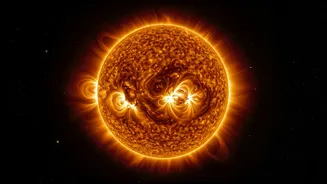
Heliophysics studies the Sun and its connection to the solar system, especially space weather. This study provides information regarding solar flares, coronal mass ejections, and the solar wind, all of which can significantly affect Earth. These occurrences can disrupt satellite communications, affect power grids, and pose dangers to astronauts. The mission is designed to understand these phenomena and to build reliable models that can forecast these events. Advancements in this area will not only enhance our understanding of the universe but also protect essential technologies and infrastructure here on Earth.
Future Implications
The move to the next phase of this mission represents a long-term investment in our understanding of the Sun and the wider universe. Further discoveries are anticipated as this mission progresses, which will lead to better technology and understanding. Space weather has a massive impact on daily life here on Earth, from radio communications to the workings of global positioning systems. The study of heliophysics is critical for forecasting space weather, leading to the creation of protective measures. With continued development, scientists anticipate greater knowledge of solar dynamics and a deeper comprehension of space weather.