






Decode the Markings
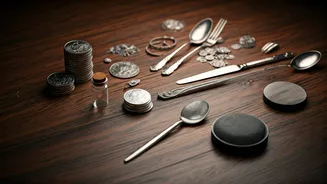
The quickest way to assess the purity of your silver is by meticulously examining it for official stamps, known as hallmarks. These small engravings are
typically found on discreet parts of the item, such as the inside of a ring band, the clasp of a necklace, or the underside of decorative pieces. The presence of '999' or '.999' signifies Fine Silver, which is 99.9% pure and commonly seen on investment-grade bullion. A mark of '925' indicates Sterling Silver, meaning it is composed of 92.5% silver alloyed with other metals for durability. Older European items might bear marks like '900' (Coin Silver) or '800'. However, be wary of 'EPNS' (Electroplated Nickel Silver), as this denotes a base metal with a thin silver coating, signifying it's not solid silver.
The Magnetic Attraction
Silver possesses no magnetic properties, making the magnet test a straightforward indicator of authenticity. Obtain a strong rare-earth magnet, such as a neodymium magnet, and bring it close to your silver piece. If the magnet adheres firmly to the item, it is highly probable that it is not genuine silver, as it likely contains a core of magnetic metals like iron or steel. For silver bars, an advanced version of this test involves tilting the bar at a 45-degree angle and allowing the magnet to slide down its surface. True silver exhibits a noticeable drag effect due to its interaction with the magnet's field, causing the magnet to descend much slower than it would on a non-magnetic material.
Rapid Ice Melt
Silver's exceptional thermal conductivity allows it to transfer heat with remarkable speed, a principle exploited in the ice cube trick. This scientific phenomenon can help you gauge your silver's purity. Place an ice cube directly onto the surface of your silver item, such as a coin or a flat bar. You will observe that the ice begins to melt almost instantaneously upon contact with the silver, a significantly faster reaction compared to melting on a standard room-temperature surface. When you touch the silver piece, you will also feel its extreme coldness, a direct result of its rapid heat absorption from the ice.
The Silver 'Ping'
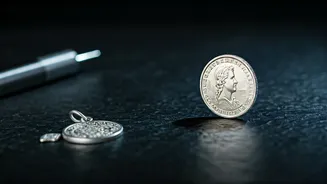
The sound produced by genuine silver offers a unique auditory clue to its authenticity. Unlike base metals, which tend to produce a dull, muted sound when struck, silver emits a distinct, resonant tone. To perform this test, carefully balance a silver coin on your fingertip and gently tap it with another coin. A real silver coin will ring out with a clear, high-pitched 'ping' that lingers for several seconds. This characteristic sound is a testament to silver's harmonic properties. For those interested in a more scientific approach, specialized smartphone applications are available that can analyze the precise frequency of this sound to help verify coin authenticity.
Nitric Acid Certainty
For those seeking irrefutable confirmation of silver's purity, the nitric acid test is employed, mirroring the methods used by professional appraisers. It is crucial to note that this method may cause minor cosmetic damage to the item, so it is best avoided for valuable antique pieces. The process involves creating a very small, inconspicuous scratch on the item's surface to expose the underlying metal, thereby bypassing any plating. A single drop of testing acid is then applied to this scratched area. The subsequent color change of the acid is indicative of the silver's composition: a bright red suggests pure fine silver, a dark crimson points to sterling silver, brown signifies approximately 80% silver, and a green hue indicates a base metal or plating. For extremely valuable or antique items, it is always advisable to consult a professional jeweler who can perform a non-destructive X-ray fluorescence (XRF) analysis.