





Majestic Elephant Swimmers
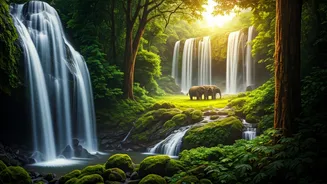
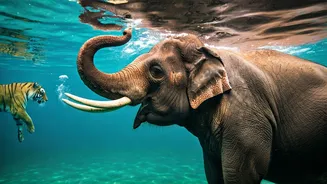
While their immense size might suggest otherwise, elephants are remarkably adept swimmers. These gentle giants possess the stamina to cover vast distances
in water, using their prehensile trunks not only for feeding and drinking but also as natural snorkels, allowing them to breathe effortlessly while submerged. This adaptation makes long aquatic journeys not only feasible but comfortable for them, showcasing a hidden facet of their impressive physiology and their ability to thrive in diverse environments.
The Aquatic Tiger
Unlike many of their feline relatives who tend to shy away from water, tigers embrace it. These formidable predators are known to relish a good swim, frequently seeking refuge and refreshment in lakes and rivers, particularly during warmer periods. Their powerful build translates into strong swimming capabilities, enabling them to traverse considerable distances if the need arises, proving that their predatory prowess extends beyond the terrestrial realm.
Graceful Moose Paddlers
Despite their somewhat ungainly appearance on land, moose are surprisingly skilled swimmers. They often venture into lakes and rivers, not just to cross them, but to access and feed on nutritious aquatic vegetation. Some individuals have even been observed to dive to remarkable depths, showcasing an impressive ability to forage for food beneath the surface, further highlighting their adaptability to aquatic environments.
Desert Dwellers Take Dip
The image of a camel navigating water might seem improbable, yet these resilient desert creatures are capable swimmers when circumstances demand. In regions where arid landscapes meet waterways, observers have witnessed camels crossing rivers with considerable ease, demonstrating an often-unseen aspect of their survival toolkit and their surprising versatility beyond sand dunes.
Kangaroo Water Escapes
Renowned for their powerful leaps, kangaroos also possess an unexpected talent for swimming. They employ a method akin to the doggy paddle to move through water, a skill frequently utilized to evade predators. This aquatic ability provides them with an additional means of escape, demonstrating a broader range of survival strategies than commonly assumed.
Serpentine Swimmers
The stereotype of snakes being exclusively land-bound creatures is far from accurate, as many species are proficient swimmers. Reptiles like rat snakes and pythons exhibit strong aquatic skills, gliding through water with an elegant, S-shaped motion that propels them efficiently across the surface. This demonstrates a significant adaptation for various habitats.
Bear's Aquatic Prowess
From brown bears to black bears, all species exhibit considerable swimming talent. These powerful omnivores often take to the water for practical reasons, such as pursuing fish for sustenance or navigating across rivers as they roam their territories. Their robust physique is well-suited for moving through water, making them formidable in both environments.
Sloth's Surprising Speed
In a truly astonishing revelation, sloths are significantly more adept in water than they are on land, moving up to three times faster. They employ a swimming motion reminiscent of the breaststroke and possess the remarkable ability to hold their breath for several minutes, showcasing an unexpected proficiency in aquatic movement that belies their slow terrestrial pace.
Crocodile's Stealthy Swim
While commonly associated with water, crocodiles also spend time on land. In their aquatic domain, these formidable reptiles utilize their powerful tails for swift and silent propulsion, making them effective hunters. With their eyes and nostrils positioned atop their heads, they can remain almost entirely submerged and undetected while observing their surroundings, a perfect adaptation for an ambush predator.