






Rethink Your Wall Colour
The foundation of any great corridor transformation lies in its walls. Often relegated to a dull, forgotten white, corridor walls can significantly impact
the overall ambiance. Opting for soft, inviting hues like light cream, pale grey, pastel green, or light blue can instantly brighten the space and make it feel more expansive. These gentle shades ensure the passage remains cheerful and welcoming. While wallpaper can be an option, it's best applied sparingly to a single wall, choosing simple patterns over bold or busy designs that could make the walkway feel cramped. This is perhaps the most cost-effective and simplest method to refresh your corridor's feel, breathing new life into a frequently traversed area without a major overhaul. Careful consideration of wall colour sets a welcoming tone from the outset.
Curate Your Wall Art
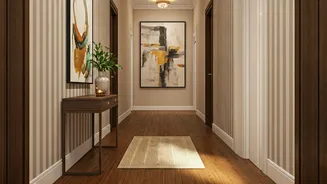
Wall frames are a popular choice for corridor decoration, but the key lies in restraint. Instead of crowding the walls with numerous pictures, a curated selection of three to five frames, neatly aligned at eye level, creates a more sophisticated and uncluttered look. Whether showcasing cherished family moments, travel memories, or tasteful art prints, the arrangement matters. Ensure adequate spacing between each frame to prevent a feeling of busyness. This deliberate placement not only enhances visual appeal but also maintains a sense of spaciousness, making it a versatile decorating tactic suitable for both long, winding hallways and shorter passages.
Mirror Magic for Narrow Spaces
For corridors that feel particularly narrow or enclosed, especially common in compact Indian apartments, a well-placed mirror is a game-changer. Mirrors possess the remarkable ability to reflect light, thereby creating an illusion of greater space and openness. Vertical mirrors are often more effective than wide ones in elongating the perceived length of the corridor. Consider incorporating round mirrors if the design aesthetic allows and space permits. Opt for mirrors with slim frames to maintain a light and airy feel, avoiding heavy, ornate designs. Positioning a mirror near a light source will maximize its impact, bouncing illumination and making the area feel significantly brighter and more welcoming. This simple yet powerful trick is invaluable for enhancing the feel of smaller entryways.
Elevate With Lighting
The lighting in most home corridors is typically functional rather than atmospheric, often limited to a single, harsh overhead bulb that can make the space feel flat. Introducing wall-mounted lights or warm-toned spotlights can dramatically alter the mood, bathing the passage in a soft, inviting glow. Yellow or warm white light is generally more conducive to creating a cozy atmosphere compared to stark white light, particularly in narrower areas. Consistent spacing of light fixtures ensures a neat and orderly appearance, while strategic placement of multiple lights is essential for longer corridors. Investing in thoughtful lighting is an often-underestimated aspect of corridor decoration that yields significant aesthetic rewards.
Strategic Console Tables
A console table can add a touch of elegance to a corridor, but only if the space permits. For wider passages, a slim, narrow console table can be a functional and stylish addition. It's crucial that the table doesn't impede movement; its primary purpose should be to hold a few essential items like keys, a small decorative lamp, or a single art piece. Avoid turning the console into a storage hub, as clutter will quickly diminish the intended aesthetic. This decorating approach is best suited for larger homes or independent residences where space is not a significant constraint and can enhance the sense of arrival.
Introduce Greenery
Plants have a unique ability to inject life and vibrancy into any space, and a corridor is no exception. Even a single well-chosen plant can transform the appearance of a hallway. In smaller corridors where floor space is limited, consider wall-mounted planters or small pots placed discreetly in corners. If natural light is scarce, high-quality artificial plants can also serve the purpose. The key is moderation; one or two plants are usually sufficient to create a fresh, welcoming atmosphere without overcrowding the walkway. This simple addition brings a natural element that makes the passage feel more alive and inviting.
Clever Wall Shelving
When floor space is at a premium, vertical solutions become your best friend. Floating shelves offer a stylish and practical way to utilize wall space in corridors. These shelves can elegantly display books, small decorative items, or even plants, provided they are not overloaded. Opting for slim shelves helps maintain a streamlined look, preventing them from appearing too bulky. This is an excellent strategy for maximizing the decorative potential of small corridors, especially in apartment settings, allowing for personal touches without encroaching on the walking path.
Runner Rugs for Flow
Long, empty corridors can sometimes feel stark and unwelcoming. A runner rug is an ideal solution to add warmth, color, and definition to such spaces. Choose flat rugs that are easy to walk on and pose minimal tripping hazards. Lighter colored rugs tend to make the area feel more open and bright. Beyond aesthetics, rugs can also contribute to a quieter environment by absorbing footfall noise, which is particularly beneficial in homes with children or shared living spaces. A well-selected runner can guide the eye and create a sense of continuity through the home.
A Single Statement Piece
For those who appreciate a minimalist approach to home decor, focusing on one impactful item can be incredibly effective. Instead of scattering numerous small decorative elements, choose a single, striking piece to anchor the corridor's design. This could be a large, captivating piece of artwork, an unusually designed mirror, or a unique wall sculpture. Such a focal point draws the eye, creates a sense of balance, and maintains a clean, uncluttered aesthetic. This strategy ensures the corridor feels intentionally designed and sophisticated without feeling overdone, allowing the chosen piece to speak for itself.