






Next-Gen VLEO Deployment
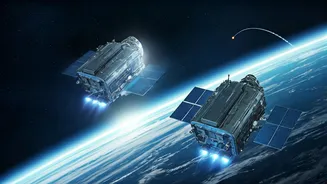
Albedo is set to launch its second satellite into Very Low-Earth Orbit (VLEO) in 2027, a mission named Vicinity. This upcoming spacecraft is engineered
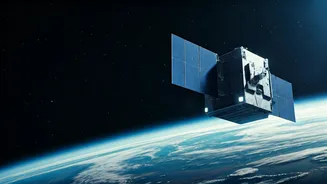
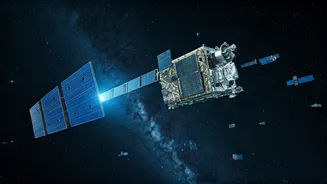
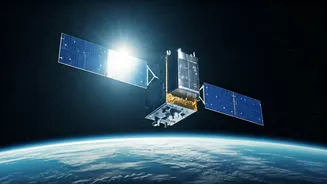
to significantly outperform its predecessor by incorporating large, deployable solar arrays. These arrays are designed to generate substantially more power compared to the fixed solar panels on the Precision bus, which was part of Albedo's 2025 mission. The primary objective with Vicinity is to demonstrate a VLEO spacecraft capable of supporting power-intensive payloads. These include advanced systems like synthetic aperture radar (SAR), crucial for detailed Earth imaging regardless of weather conditions, and complex electromagnetic warfare and communication suites. Albedo's CEO, Topher Haddad, highlighted that while the new design allows for greater power generation and accommodates the unique challenges of VLEO, such as atmospheric drag and atomic oxygen exposure, the satellite will remain purpose-built for this demanding orbital environment. Vicinity is expected to have a mass of approximately 300 kilograms, matching the size of the Precision bus, and will benefit from upgraded flight software and electronics informed by the data gathered during the nine-month Clarity-1 mission.
Building on Success
The upcoming Vicinity mission represents a significant step in Albedo's strategy to gain crucial flight heritage for its new technologies, including the sophisticated deployable solar arrays. Haddad indicated that this development will be funded internally, allowing Albedo to refine its VLEO spacecraft with each subsequent mission. The success of the earlier Clarity-1 mission, which validated the Precision bus and proved the feasibility of VLEO imaging, provides a strong foundation for Vicinity. Albedo's announcement stated that Vicinity will establish a new benchmark for VLEO capabilities. Once this technology is proven in flight, it is expected to substantially reduce the perceived risk for potential customers interested in purchasing Vicinity-class missions. This progression from focusing on selling Earth observation data to becoming a satellite manufacturer signifies Albedo's strategic pivot. Their continued emphasis on VLEO stems from its potential to unlock exceptionally high-quality data acquisition at a cost that facilitates widespread proliferation. Albedo envisions VLEO becoming as ubiquitous as Low-Earth Orbit (LEO) across various mission types in the future.
Vertical Integration for Growth
To meet the projected demand for VLEO constellations, which may require more satellites than LEO counterparts for continuous observation or communication, Albedo is actively pursuing vertical integration. This approach is essential for enabling high-volume production of their satellite buses and payloads. For instance, Albedo has developed specialized coatings and surface treatments for its solar panels to enhance their resilience against the corrosive effects of atomic oxygen prevalent in VLEO. Beyond offering the Precision and Vicinity satellite buses, Albedo plans to provide complete payload solutions. Customers will have the option to purchase an entire Clarity satellite equipped with advanced optical and thermal infrared imaging capabilities, or a Vicinity bus outfitted with a SAR payload. Furthermore, Albedo is prepared to deliver full turnkey VLEO missions, encompassing satellite operations and data processing services. Some clients may prefer to operate these systems in LEO but retain the capability to transition to VLEO when needed, a flexibility Albedo aims to support. VLEO offers compelling advantages such as improved Earth observation quality and low-latency communication links with robust signal integrity, addressing concerns about LEO congestion and potential security threats that are increasingly important for government agencies.