





Dwindling Water Reserves
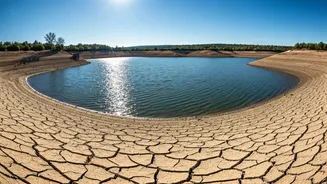
Mumbai's lifeline, the seven reservoirs that supply its daily water needs, are experiencing a severe depletion. As of recently, these crucial water sources
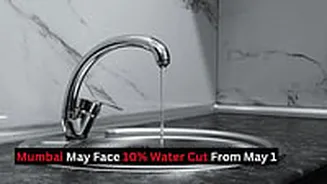
are holding only a meager 33.6% of their total capacity. This stark decline is primarily attributed to the intensified summer heat across western India, which has significantly accelerated the rate of water evaporation from the surface of these lakes. The situation is so pressing that the Brihanmumbai Municipal Corporation (BMC) is contemplating a 10% reduction in water supply, a measure that could take effect from May 1st. This proposal has been formally submitted to the municipal commissioner for necessary approval, highlighting the urgency of the situation and the administration's efforts to implement preemptive conservation strategies before the peak summer months put further strain on the available resources. The current water stock is projected to last only until July, underscoring the necessity of such drastic measures.
Monsoon Forecast Worries
Adding to the growing concerns over water scarcity is the recent long-range forecast from the India Meteorological Department (IMD). The IMD has predicted that the upcoming southwest monsoon season in 2026 is likely to deliver rainfall below the usual long-period average across the country. Specifically, the forecast indicates rainfall at approximately 92% of the LPA, with a potential margin of error of up to 5%. This prediction is partly influenced by evolving oceanic conditions, with weak La Niña-like patterns in the equatorial Pacific transitioning towards ENSO-neutral conditions. The El Niño-Southern Oscillation (ENSO) phenomenon, which involves fluctuations in sea surface temperatures and wind patterns in the Pacific, has a significant impact on global weather systems, including the Indian monsoon. The potential for a weaker monsoon season means that the city cannot rely on substantial replenishment of its reservoirs in the immediate future, further complicating water management efforts and reinforcing the need for stringent conservation measures.
Daily Supply & Statistics
Presently, Mumbai relies on a daily allocation of approximately 4,100 million litres of water drawn from its network of seven key lakes, including prominent ones like Modak Sagar, Tansa Lake, Bhatsa Lake, and Vaitarna Lake. The city's total annual water requirement stands at an estimated 14.47 million litres. Authorities are emphasizing the critical importance of meticulous water management strategies, extending the planning horizon to August from the usual July, in anticipation of a potentially delayed monsoon onset. The current water stock levels as of April 15, 2026, paint a clear picture of the deficit: Bhatsa reservoir holds the largest volume with 2,35,439 million litres, followed by Upper Vaitarna with 77,045 million litres, Middle Vaitarna with 69,106 million litres, Modak Sagar with 45,340 million litres, Tansa with 40,817 million litres, Vihar with 15,353 million litres, and Tulsi with a modest 3,274 million litres. The BMC administration has stated that maintaining a regular water supply throughout Mumbai is contingent upon the implementation of the proposed cuts beginning May 1st.