






From Stumbles to Speed
Just a year ago, the landscape of humanoid robot participation in endurance events was markedly different, often characterized by comical struggles and slow
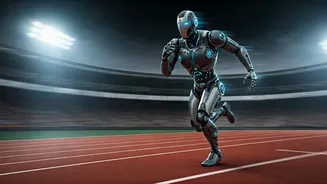
progress. The previous year's event in Beijing saw robots awkwardly navigating the course, with the fastest competitor barely managing to finish within 1 hour and 50 minutes. This time, however, the scene transformed into one of astonishing athletic achievement. The recent half marathon showcased a dramatic leap in robotic capabilities, with a robot developed by a prominent Chinese tech company not only completing the 13.1-mile distance but doing so in an astounding 48 minutes and 19 seconds. This time was significantly faster, by a margin of nine minutes, than the human world record set earlier in the year, signaling a monumental shift in robotic performance.
Autonomous Dominance
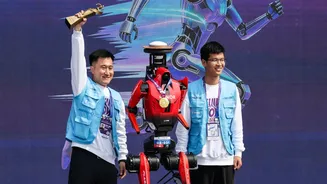
The competition highlighted two distinct approaches to robotic racing, both yielding record-breaking results. The leading robot, though remotely controlled by its human operators, set a blistering pace. However, a second robot from the same developer achieved victory due to the event's unique scoring system, which prioritized autonomous navigation. This second robot, which independently navigated the entire course, finished in 50 minutes and 26 seconds. While still impressively fast and surpassing the human world record, it was the autonomous nature of its run that earned it the top spot. This outcome underscores the increasing sophistication of AI and navigation systems in robotics, rewarding machines that can operate independently and effectively.
Rapid Technological Leap
The stark contrast between this year's results and those from just twelve months prior serves as a powerful testament to the accelerating pace of innovation within the robotics industry. China, in particular, has demonstrated an intense commitment to this field, with investments reaching such high levels that government officials have voiced concerns about potentially overshadowing other crucial research and development areas. This intense focus, however, has evidently fueled rapid advancements, moving humanoid robots from clumsy participants to record-setting athletes in an exceptionally short timeframe. The energy and resources poured into robotics are yielding tangible and remarkable breakthroughs.
Future Applications Emerge
While the current public-facing advancements in humanoid robots are heavily skewed towards athletic feats and intricate dance routines, the underlying technologies developed for these demanding applications hold significant promise for broader utility. Experts anticipate that the structural reliability and advanced liquid-cooling systems perfected for these robots could find their way into various industrial settings in the future. As engineers continue to push the boundaries of robotic movement and performance, these innovations are expected to eventually transition and contribute to practical applications that could impact everyday life and various industries beyond competitive sports.
Beyond Endurance Races
The impressive performance in the half marathon is not an isolated incident; humanoid robots are rapidly becoming competitive in shorter, faster races as well. One notable example is a robot that achieved a remarkable top speed, reaching speeds that are astonishingly close to those of legendary human sprinters. This rapid development in speed capabilities further illustrates the widespread progress being made in humanoid robotics, extending beyond endurance and into explosive acceleration. The trajectory suggests that robots will soon be contenders in a wide array of physical competitions and tasks requiring high levels of agility and speed.