






Nipah Vaccine Breakthrough
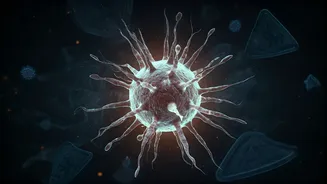
In a significant advancement for global health security, researchers in Japan are initiating a human trial for a promising vaccine against the Nipah virus.
This development is particularly critical given the virus's high mortality rate, which is estimated to range between a staggering 40% and 75%. The vaccine candidate, engineered at the University of Tokyo, is slated to begin its clinical evaluation in Belgium this coming April. Currently, the medical community faces a critical challenge as there is no approved vaccine or specific antiviral treatment available for Nipah virus infections, making preventative measures and vaccine development paramount in controlling outbreaks and saving lives. This trial represents a pivotal step towards potentially mitigating the severe threat posed by this zoonotic disease.
Innovative Vaccine Design
The novel Nipah vaccine's ingenious design involves a clever integration of genetic material. Researchers have reportedly incorporated a segment of the Nipah virus's genetic blueprint into the measles virus, a virus well-recognized and extensively utilized in global immunization programs for its own vaccine. When this modified vaccine is administered to humans, the body begins to produce antigen proteins that closely resemble those of the Nipah virus. This process effectively primes the immune system, stimulating a robust defensive response that can help ward off the onset of Nipah virus symptoms. This strategy leverages the familiarity and safety profile of the measles vaccine to deliver protection against a far more virulent pathogen, showcasing a sophisticated approach to vaccine development.
Clinical Trial Phases
The efficacy and safety of this Nipah vaccine candidate have already been rigorously tested and confirmed in animal studies, specifically with hamsters, showing positive results. The next crucial step is the Phase 1 clinical trial, which will focus on meticulously assessing the vaccine's safety profile in humans. This initial human trial is designed to involve approximately 60 participants, providing essential data on tolerability and any potential adverse reactions. In parallel, a separate research initiative by a team from Oxford University commenced Phase 2 clinical trials for their own Nipah vaccine candidate in Bangladesh back in December, with plans to enroll around 300 individuals aged between 18 and 55. These coordinated efforts underscore the global urgency and collaborative spirit in the fight against the Nipah virus.
Understanding Nipah Virus
The Nipah virus, recognized by the World Health Organization (WHO) as a priority disease requiring focused research and development, is a formidable zoonotic agent. Its transmission typically originates from bats and can spread to humans either directly or through the consumption of contaminated food. Further complicating its spread, Nipah can also jump from animals like pigs to humans, and in some instances, it can transmit between people through close and sustained physical contact, particularly within healthcare environments. The spectrum of illness in humans infected with the Nipah virus is broad, ranging from individuals who remain asymptomatic to those who develop severe respiratory distress and life-threatening encephalitis. The global case fatality rate underscores the severity of this disease, emphasizing the critical need for effective interventions like vaccines.