


Skin Deep Clues
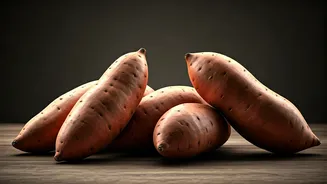
The outer layer of a sweet potato offers significant hints about its authenticity. Genuine sweet potatoes typically possess a rougher, more textured skin,
often with a subtle glow or a matte finish depending on the variety. You might observe small root hairs or a slightly irregular surface, which are natural characteristics. Conversely, fake or treated sweet potatoes might exhibit an unnaturally smooth, almost plastic-like sheen, or an overly uniform appearance that looks too perfect. Sometimes, artificial coloring or waxing can create a suspicious uniformity or an unnatural shine. Always feel the skin; it should feel firm but not hard, with a slight yielding quality. Be wary of excessively shiny or unnaturally colored skins, as these can be red flags indicating manipulation. The subtle imperfections of nature are often your best guide to a real sweet potato.
Weight and Firmness
A crucial indicator of a sweet potato's genuineness lies in its feel. Authentic sweet potatoes tend to be denser and heavier for their size compared to impostors, which might feel lighter or hollow. When you pick one up, it should feel substantial and solid in your hand. Gently press the surface; a real sweet potato will be firm but will yield slightly to pressure without feeling mushy or developing deep indentations. If the vegetable feels unusually light, or if it's overly hard and unyielding, it might be a sign that it's not a true sweet potato or has been treated. Pay attention to this tactile assessment, as it can reveal a lot about the internal structure and moisture content, distinguishing the genuine article from a less desirable alternative.
The Cutting Test
To truly ascertain the nature of your sweet potato, a simple cutting test can be incredibly revealing. When you slice into a genuine sweet potato, you'll notice a distinct, moist interior. The flesh should be a vibrant orange, purple, or even white, depending on the variety, and it will likely exude a small amount of milky white sap, especially from the edges. This sap is a natural indicator of the tuber's freshness and authenticity. If, upon cutting, the inside appears dry, strangely colored, or lacks any natural moisture, it's a strong suggestion that it might not be a genuine sweet potato. The texture should be firm yet tender, not crumbly or brittle. Observing this internal characteristic provides a definitive confirmation of its true nature.
Aromatic Clues
Beyond visual and tactile inspection, the aroma of a sweet potato can offer another layer of identification. Real sweet potatoes, particularly when fresh, emit a subtle, earthy, and slightly sweet fragrance. This scent is natural and pleasant, indicative of the sugars and starches developing within the tuber. If a sweet potato has a lack of any discernible smell, or conversely, emits an artificial, chemical, or fermented odor, it's a strong reason for suspicion. Such unusual scents might suggest the use of artificial treatments, preservatives, or that the tuber is past its prime and potentially not a true sweet potato. Trust your nose; an authentic sweet potato should smell naturally wholesome.