
Budget Allocation Overview
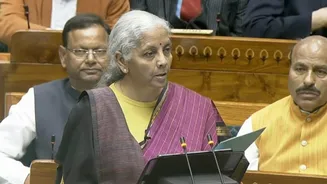
The Education Budget 2026 saw a considerable increase in financial backing, with a total allocation of ₹1,39,285.95 crore. This sum surpasses the previous
year's allocation, indicating a firm commitment from the government to fortify the education sector. The increased funding underscores the importance of education in national development and signals a push for enhancements across various levels of learning. This financial injection aims to cover multiple facets, including infrastructure improvements, curriculum development, and teacher training programs. Such a substantial investment highlights the government's aim to boost the educational system's overall quality and accessibility, ensuring it meets the evolving needs of students and the nation.
New Institutions Announced
A significant highlight of the Education Budget 2026 is the announcement of new institutions aimed at expanding the availability of quality education. The budget included the establishment of three new AIIMS (All India Institutes of Medical Sciences), indicating a focus on strengthening the healthcare education sector. Furthermore, the budget proposed the creation of three Ayurveda institutes, which aligns with promoting traditional medicine and holistic healthcare practices. A design school was also announced, reflecting the growing importance of innovation and design thinking in various fields. These new institutions represent a strategic expansion of educational infrastructure, targeting diverse sectors and providing wider opportunities for specialized learning and skill development. These initiatives are intended to foster research, innovation, and expertise in crucial areas, contributing to a well-rounded educational ecosystem.
Focus on Infrastructure
The budget demonstrated a clear emphasis on enhancing educational infrastructure. This involved the establishment of new girls' hostels in every district, addressing the need for safe and accessible accommodation for female students across the country. Additionally, the budget allocated resources for the establishment of a hospitality institute, responding to the growing tourism and hospitality industry. Moreover, the proposal included setting up five university townships. These townships would likely be integrated learning environments with housing, research facilities, and community spaces, aiming to foster a comprehensive academic atmosphere. Such developments aim to support not only the expansion of physical infrastructure but also contribute to the creation of environments that nurture holistic development and encourage academic excellence. The provision of such facilities reflects a comprehensive approach to improve educational standards, aiming to provide better learning conditions and promote inclusivity across the education sector.
Bridging Education & Employment
A significant aspect of the Education Budget 2026 is its focus on aligning education with employment needs. To achieve this, several initiatives were introduced. Notably, the budget emphasized the incorporation of Artificial Intelligence (AI) labs into educational institutions. This move suggests a strategic shift towards preparing students for the demands of the digital era, making sure they are well-versed in new technologies and future-proof skills. Furthermore, the budget aimed at encouraging the development of content labs. These labs would likely focus on innovative content creation and distribution, helping students explore their creativity while preparing them for relevant industry trends. The inclusion of these measures shows the government's aim to address the skills gap and provide graduates with the competencies needed for successful careers. This concerted focus demonstrates a deep understanding of the need to integrate education and employment, resulting in a workforce that is prepared for the changing job market.