






Echoes of Grief
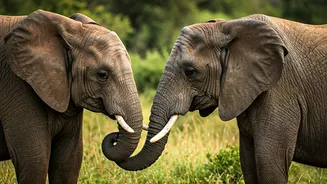
Elephants exhibit a deeply touching capacity for mourning. Witnessing their silent vigils at the resting places of departed herd members, often involving
gentle touches and prolonged stillness, points to a profound emotional response. This behaviour underscores their complex social bonds and acknowledges the significance of loss within their communities, a trait that resonates with our own understanding of grief and remembrance. Their capacity to revisit and interact with the remains of their kin suggests a sophisticated emotional landscape, far beyond simple instinct. This poignant connection to their deceased counterparts highlights a level of empathy and sorrow that is truly remarkable in the animal kingdom.
The Mighty Trunk
An elephant's trunk is a marvel of biological engineering, boasting over 40,000 muscles. This incredible appendage is not just for show; it's an instrument of immense versatility and precision. Whether it's delicately plucking a single blade of grass or exerting the force needed to move heavy logs, the trunk's adaptability is astonishing. Its intricate structure allows for a wide range of functions, making it one of the most complex and valuable tools found in any creature. The dexterity it offers enables elephants to navigate their environment, interact with objects, and even communicate, proving its vital role in their daily lives and survival.
Self-Aware Beings
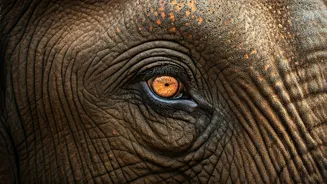
Remarkably, elephants are among the select few animal species to pass the mirror self-recognition test. This ability to identify themselves when looking in a mirror indicates a sophisticated level of self-awareness, placing them in the esteemed company of animals like great apes and dolphins. This cognitive milestone suggests that elephants possess an understanding of their own identity and individuality, contributing to their complex social interactions and decision-making processes. It offers a profound glimpse into their consciousness, revealing a mind capable of introspection and self-perception.
Whispers Through Earth
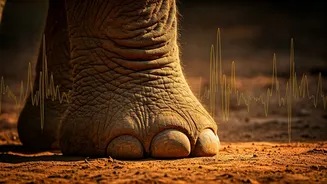
Communication for elephants extends beyond audible calls, utilizing seismic vibrations to convey messages. These low-frequency rumbles travel through the ground, allowing them to connect with other elephants over vast distances. By sensing these vibrations through their feet, they can share vital information about the environment, potential dangers, or social cues. This extraordinary method of long-range communication highlights their intricate social networks and their ability to coordinate activities across expansive territories, demonstrating an awareness of their surroundings and each other that is truly impressive.
Enduring Memories
Elephants possess exceptional memories, capable of recalling vital locations like water sources and established migration routes for decades. This long-term recall is crucial for their survival, particularly during arid periods, ensuring herds can navigate to sustenance and avoid perilous journeys. Their ability to remember individuals, both kin and strangers, also plays a significant role in their social dynamics and herd cohesion. This remarkable cognitive faculty allows them to learn from past experiences and pass down crucial survival knowledge through generations.
Tusks of Preference
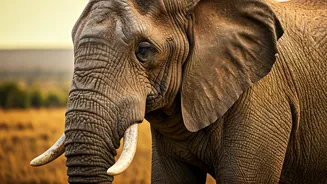
Similar to humans' hand preference, elephants often exhibit a dominant tusk, being either left or right-tusked. This preference leads to one tusk becoming more worn and shorter over time due to its frequent use in digging, foraging, or defense. This subtle yet significant characteristic reveals a form of lateralization in their behavior, mirroring a trait common in many intelligent species. Observing these dominant tusks provides an interesting insight into individual elephant habits and their interaction with the environment, a detail often overlooked in general observations of these magnificent creatures.