





Unveiling the Fake
Authorities in Hapur, Uttar Pradesh, recently uncovered a clandestine operation producing counterfeit tomato sauce. A raid on a factory revealed large
quantities of suspect liquid, later identified as potentially containing dangerous chemical dyes and acids. The entire production setup, including raw materials and finished products, was confiscated. Officials suspect the sauce is adulterated and poses significant health risks, with samples undergoing rigorous laboratory analysis to pinpoint the exact contaminants. To safeguard public health, the seized sauce is being destroyed, preventing it from entering the market. The Food Department urges consumers to exercise caution, avoid unbranded and loose food items, and report any suspicious products immediately to aid their ongoing efforts.
Colour Clues
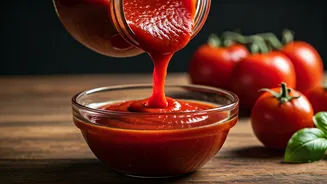
The visual appeal of tomato sauce can be a deceptive indicator of its purity. Genuine tomato sauce typically exhibits a natural, deep red hue, often with a slightly muted or dull appearance due to its organic origins. Conversely, sauces that boast an unnaturally bright, vibrant red are a red flag, strongly suggesting the presence of artificial synthetic dyes. Such adulterated products often possess a uniform, overly glossy sheen, starkly contrasting with the more organic, slightly irregular look of real tomato-based sauces. Pay close attention to this initial visual cue; an overly perfect or vivid colour might be a sign that something is amiss.
Texture Tells Tales
Assessing the consistency of tomato sauce provides another crucial insight into its authenticity. Pure tomato sauce generally has a characteristic thick, pulpy texture, reflecting the natural state of processed tomatoes. Should the sauce feel unusually watery, suggesting dilution, or conversely, excessively thick and gelatinous, it might indicate the addition of fillers like starch to artificially alter its viscosity. These deviations from the expected texture are common in adulterated products, which often aim to mimic the richness of real sauce through artificial means. An off-puttingly runny or unnaturally smooth consistency devoid of any fibrous tomato particles can signal it's not the real deal.
Flavour First
The taste profile of tomato sauce is a direct indicator of its ingredient quality and purity. Authentic sauces offer a balanced flavour, a harmonious blend of tanginess, a subtle sweetness, and mild acidity, reflecting the natural taste of ripe tomatoes. If a sauce presents an overwhelmingly sweet, excessively sour, or distinctly artificial flavour, it's a strong signal that chemical additives or excessive sugars have been incorporated. A lingering chemical-like aftertaste is particularly concerning and a definitive sign that the sauce is likely impure and potentially harmful. Trust your palate; an unnatural taste is a significant warning sign.
Water Separation Test
A simple yet effective method to detect adulteration involves a basic water test. By taking a small quantity of tomato sauce and mixing it with water, you can observe its behaviour. Pure tomato sauce, when dissolved in water, will blend in relatively smoothly, creating a uniform mixture. In contrast, adulterated sauce often exhibits a tendency to separate or may leave behind distinct coloured streaks or cloudy residues. These visual cues indicate the presence of artificial dyes or other additives that do not naturally dissolve or blend with water. This straightforward home test can help reveal hidden ingredients that might not be apparent otherwise.
Label Scrutiny
Deciphering the ingredients list on a tomato sauce label is paramount for ensuring product integrity. Always scrutinize the label for an excessive number of preservatives, artificial colouring agents, or chemical thickeners. A lengthy list of unfamiliar or complex chemical names should raise a significant caution, as it often points towards adulteration. High-quality, pure tomato sauce typically features a concise list of simple, recognizable ingredients such as tomatoes, sugar, salt, and vinegar, with minimal or no additional artificial additives. Prioritizing products with straightforward ingredient lists significantly reduces the risk of consuming adulterated items.