




Preparing the Rice
The journey to delicious Meethe Chawal begins with selecting the right rice and preparing it for cooking. For this traditional Punjabi festive treat, Sela
rice, also known as parboiled rice, is the preferred choice. It's important to blanch the rice first, a process that involves briefly steeping it in hot water before rinsing. This helps the grains maintain their structure during the subsequent cooking stages. Once blanched, the rice is ready to be infused with aromatic spices. In a pot of boiling water, you'll introduce a hint of vibrant color with yellow food coloring, if desired, along with whole spices like cloves and green cardamoms. These aromatics will lend their fragrant essence to the rice as it cooks, creating a layered flavor profile. The rice is then simmered in this spiced water for approximately 12 minutes, until it reaches a state of being almost cooked, ensuring it has absorbed the flavors without becoming mushy.
Draining and Sautéing
After the initial simmering, the rice needs to be carefully drained to remove excess water and prevent overcooking. It's essential to rinse the rice twice under cold running water immediately after draining. This cooling process helps to stop the cooking and separate the grains, ensuring a fluffy texture in the final dish. After rinsing, the rice should be placed in a colander and allowed to drain thoroughly; any residual moisture can impact the consistency of the Meethe Chawal. While the rice is draining, it's time to prepare the rich base. In a heavy-bottomed pan, melt a generous portion of ghee. This clarified butter is crucial for imparting a distinctive richness and aroma. Into the hot ghee, add raisins and shredded almonds. Sauté these briefly until they just begin to change their color, indicating they are toasted to perfection. Once toasted, remove the raisins and almonds from the pan and set them aside. This step preserves their texture and prevents them from burning in the subsequent stages. Finally, add the drained rice to the same pan, incorporating it well with the remaining ghee, ensuring each grain is lightly coated.
Layering and Steaming
The next phase involves carefully layering the rice and sugar to create the sweet core of this Baisakhi delicacy. To prepare for sealing the pot, grease the rim of the lid with a little ghee. Then, take a length of dough, roll it into a string, and place it along the greased edge of the lid. Lightly grease this dough seal as well; this meticulous preparation ensures an airtight closure, crucial for the steaming process. Now, reduce the heat to its lowest setting, as the rice will be cooked through steaming rather than direct heat. Carefully remove about half of the rice from the pan and set it aside temporarily. Sprinkle half of the total sugar quantity evenly over the rice remaining in the pan. Then, gently layer the reserved half of the rice back on top, followed by the remaining sugar. This layering ensures that the sugar melts and infuses evenly throughout the dish. Once assembled, cover the pan with the prepared ghee-greased and dough-sealed lid. Place the entire pan on a tawa (a flat griddle) positioned over very low heat. Allow the Meethe Chawal to steam undisturbed for approximately 30 minutes. This slow steaming process allows the sugar to dissolve and the flavors to meld beautifully, creating a fragrant and sweet rice pudding.
Serving the Delight
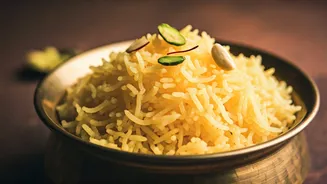
The final and most rewarding step is to unveil and serve the beautifully prepared Meethe Chawal. After the 30-minute steaming period, carefully break the dough seal around the lid. This action releases the fragrant steam that has been trapped, signaling that the dish is ready. Gently open the lid to reveal the glistening, sweet rice. The grains should be tender and infused with the aromatic essence of the cardamom and cloves, with the sugar caramelized to a perfect sweetness. Before serving, garnish the Meethe Chawal generously with the reserved fried raisins and almonds. These add a delightful crunch and nutty flavor that beautifully complements the soft, sweet rice. Serve this traditional Punjabi dish hot, as it is traditionally enjoyed during the Baisakhi festival. The combination of fragrant rice, sweetness, and the nutty garnish makes it a perfect symbol of prosperity, happiness, and the joyous spirit of new beginnings that Baisakhi celebrates.