
Budget Allocation Overview
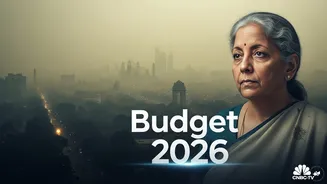
The Education Budget 2026 received a substantial allocation of Rs 1,39,285.95 crore, a figure indicating a greater investment than the previous year. This
substantial financial commitment underscores the government's resolve to strengthen and reform the education sector. The budget’s core focus is on addressing the evolving needs of the Indian education system. It seeks to tackle critical areas such as infrastructure development, curriculum reforms, and skill enhancement, all with the goal of creating a more robust and relevant educational framework. The increased financial commitment is a clear signal of the importance given to improving the quality of education and making it more accessible across India. This allocation serves as a foundation for implementing strategic initiatives aimed at fostering educational excellence and making sure students are well-prepared for their future careers.
Medical Education Expansion
A significant portion of the budget is earmarked for boosting medical education. The plan involves establishing three new AIIMS (All India Institutes of Medical Sciences) and three Ayurveda institutes. This expansion aims to enhance the availability of medical education and healthcare services nationwide. These new institutions will add to the number of seats available for medical aspirants, tackling the existing gap between the need for doctors and the actual number available. The initiatives are strategically planned to improve healthcare infrastructure by bringing cutting-edge medical education closer to a wider population. The introduction of these institutes will also boost research and innovation in the healthcare sector, which will eventually raise the quality of medical care available to all citizens. The push for Ayurveda underscores the importance of traditional medicine in the healthcare landscape.
AI and Content Labs
The budget highlights the establishment of AI (Artificial Intelligence) and content labs, demonstrating the government’s commitment to preparing students for future technological advancements. These labs will equip students with essential skills for the digital age, fostering innovation and enhancing their employability. AI and content labs are meant to introduce students to the newest technologies and methods, giving them hands-on experience in areas like data analytics, machine learning, and digital content production. This proactive strategy intends to make sure that the education system stays relevant and prepares students for the evolving demands of the job market. The labs will function as innovation hubs, promoting exploration and creativity, encouraging students to come up with new ideas and solutions. This is meant to inspire a culture of lifelong learning, where students are not only taught concepts but also how to adapt to new technologies and make use of them effectively.
University Townships Vision
The Education Budget 2026 includes a plan to create university townships, which is a modern approach to education and community development. These townships will provide integrated educational facilities. The concept of university townships goes beyond simple educational infrastructure. It involves the creation of comprehensive educational ecosystems that have everything from classrooms and research facilities to residential areas and recreational spaces, all in one place. These townships encourage a sense of community by bringing students, educators, and researchers together. They will foster interdisciplinary cooperation and innovation. These developments are meant to bridge the gap between education and employment by providing a conducive environment for skill development, practical training, and entrepreneurship. The goal is to provide a holistic education, allowing students to not only study but also develop important life skills, making them more ready for the challenges of the modern world.
Addressing Academic Load
Acknowledging the burden of heavy academic workloads, the government has announced a 25% reduction in the Class 10 syllabus in Kerala. This move is aimed at reducing stress on students, allowing more time for practical learning and skill development. By carefully reviewing and streamlining the curriculum, the government seeks to provide a balanced educational experience that places equal value on academic subjects and extracurricular activities. The revised curriculum will prioritize a deeper understanding of key concepts, shifting away from rote learning and memorization. The focus is to allow students to concentrate on subjects that match their interests and career goals, while still covering the essential areas. This syllabus reduction is designed to promote a more student-friendly educational environment that encourages curiosity, creativity, and active participation in learning. This method attempts to reduce the pressure and anxiety that students sometimes experience, thus improving their overall well-being and academic performance.