






Dual Spacecraft Spotlight
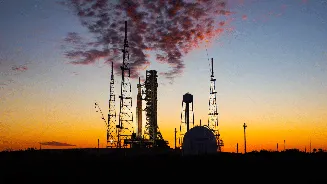
In a striking visual captured at Florida's Kennedy Space Center, two distinct spacecraft represent different frontiers of human spaceflight. The SpaceX
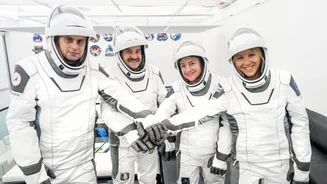
Crew-12 Dragon, atop its Falcon 9 rocket, stands poised for a mission to the International Space Station (ISS). Close behind, though less prominent in this particular image, is the colossal Artemis 2 Space Launch System (SLS) rocket, carrying the Orion spacecraft. This juxtaposition underscores the concurrent progress in both low-Earth orbit operations and ambitious deep-space exploration. The Crew-12 mission, carrying NASA astronauts Jessica Meir and Jack Hathaway, alongside ESA's Sophie Adenot and Roscosmos's Andrey Fedyaev, was set to commence an eight-month stay aboard the ISS, augmenting the existing skeleton crew following a previous medical evacuation. Meanwhile, the Artemis 2 rocket, a marvel of engineering, is preparing for its own historic 10-day voyage around the moon with astronauts Reid Wiseman, Victor Glover, Christina Koch, and Jeremy Hansen.
Artemis 2: Lunar Leap Challenges
The Artemis 2 mission, NASA's significant step towards returning humans to the moon, has encountered a critical delay. The powerful Artemis 2 SLS rocket, designed to propel astronauts on a 10-day circumlunar journey, experienced a hydrogen fuel leak during a crucial wet dress rehearsal on February 3rd. This setback necessitated a postponement of the launch, with the earliest possibility now shifted to early March. This fueling test, which involves fully loading the rocket with propellant to identify and rectify potential issues, revealed an unexpected problem. The sheer scale of the SLS rocket is awe-inspiring; its launch system integrates two massive solid rocket boosters and four RS-25 liquid-fueled engines at the core stage's base. Upon ignition, these components are engineered to generate an astonishing 8.8 million pounds of thrust, surpassing the power of the iconic Saturn V rockets that facilitated the Apollo missions, thus emphasizing the advanced capabilities being developed for lunar exploration.
Crew-12: ISS Operations
The SpaceX Crew-12 mission represents a vital contribution to the continuous human presence in orbit. The Crew-12 Dragon spacecraft, named 'Freedom,' launched on February 13th aboard a Falcon 9 rocket from Space Launch Complex 40. This mission's primary objective is to transport a new contingent of astronauts to the International Space Station (ISS) for an extended duration of eight months. Upon their arrival and successful docking, they will join the existing skeleton crew. This smaller team had been diligently maintaining the orbital outpost following the medical evacuation of the Crew-11 mission in January due to an undisclosed health concern. The arrival of Crew-12 is essential for ensuring the ongoing operations, research, and maintenance of the ISS, maintaining critical scientific activities and international collaboration in space.