




Historic Lunar Voyage
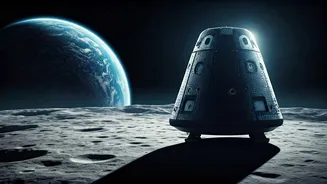
The Artemis 2 mission, a cornerstone of NASA's ambitious lunar program, successfully launched four astronauts on a trajectory that looped around the Moon.
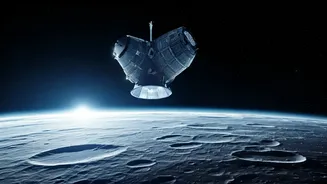
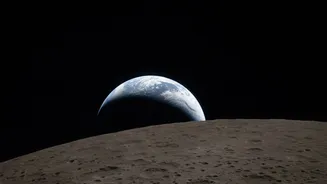
This voyage represented a significant step in the 21st-century pursuit of lunar exploration, building upon the legacy of past lunar missions while charting a new course for human presence beyond Earth. The astronauts aboard the Orion spacecraft experienced a breathtaking flyby, capturing stunning imagery of the lunar surface and Earth from a unique vantage point. The mission's primary objective was not to land, but to test critical systems and gain invaluable experience for future crewed missions, including those intended for lunar landings. This historic journey demonstrated the capabilities of the Orion capsule and the foundational elements required for sustained human presence on the Moon and beyond, generating excitement and anticipation for what lies ahead in space exploration.
Astronauts' Remarkable Journey
The crew of Artemis 2 embarked on an extraordinary expedition, becoming the first humans in decades to journey to the Moon. Commander Reid Wiseman, along with his fellow astronauts, navigated the vastness of space, performing critical maneuvers and gathering vital data. Their experiences, from the awe-inspiring views of Earth to the intimate flyby of the Moon, have been shared with the world, igniting a sense of wonder and human achievement. Beyond the technical objectives, the mission was marked by personal moments, such as the naming of a lunar 'bright spot' in honor of a commander's late wife, underscoring the human element of space exploration. The astronauts' safe return to Earth after their epic moon mission was met with widespread celebration, a testament to the success of their daring voyage and the culmination of years of planning and dedication. Their stories and the photos they captured offer an intimate glimpse into the realities of deep space travel.
Lunar Science Insights
The Artemis 2 mission, even without a landing, provided significant opportunities for lunar science. The astronauts' close-up observations and photographic documentation of the Moon's surface offer valuable data for researchers. Scientists are particularly interested in understanding the Moon's geological history, including theories about its formation, such as the impact of colossal asteroids. Furthermore, the mission's success bolsters confidence in technologies and methodologies that will be crucial for future investigations, including the potential to find water ice in the Moon's permanently shadowed craters. This ice is a critical resource for future lunar bases and long-term human habitation. The mission also indirectly supports ongoing efforts to understand lunar samples, such as Apollo moon rocks, which continue to unlock old lunar mysteries and provide insights into the early solar system. The data and experiences from Artemis 2 are expected to accelerate our understanding of the Moon's composition, evolution, and potential for future human endeavors.
Future of Space Exploration
The Artemis 2 mission is not an endpoint but a critical stepping stone towards humanity's future in space. Its success fuels ambitions for a permanent moon base, a long-held dream for many space agencies and lawmakers. The lessons learned from the Artemis 2 flyby are directly informing the planning for Artemis 3 and subsequent missions, which aim to land astronauts on the lunar surface. Beyond the Moon, the experience gained will be instrumental in preparing for missions to Mars and other celestial bodies. The insights into spacecraft operation, astronaut training, and the challenges of deep space travel are invaluable. Furthermore, the mission underscores the growing global interest in lunar exploration, with various countries and private entities developing their own lunar ambitions. The potential for lunar resource utilization, scientific research, and even future lunar tourism are all becoming more tangible possibilities, inspired by the achievements of Artemis 2 and its crew.