






Grace Kelly's Lace Masterpiece
In 1956, Grace Kelly transitioned from Hollywood stardom to princess status upon marrying Prince Rainier III of Monaco. Her wedding veil, a creation by
MGM costume designer Helen Rose, was a harmonious blend of tradition and personal style, capturing immediate attention. This circular veil was meticulously crafted from antique Brussels lace, adorned with delicate seed pearls and charming embroidered lovebird motifs, subtly framing her face. Rather than a traditional royal tiara, Kelly chose a Juliet cap to secure her veil, setting a unique precedent for royal headwear. This choice highlighted the veil itself as a significant adornment, emphasizing its intricate craftsmanship and the romantic symbolism embedded within its design, making it a memorable piece of bridal history.
Diana's Dramatic Length
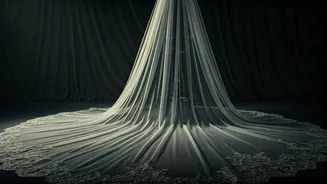
Princess Diana was acutely aware of the global fascination surrounding her wedding, and she entrusted Britain's oldest embroidery atelier, S. Lock, with the creation of her profoundly traditional veil. This was a project kept under wraps, with only a select few, including designers David and Elizabeth Emanuel and embroiderer Umpleby, aware of its extraordinary scale. Diana specifically requested a veil measuring an astonishing 40 feet in length, crafting a fairytale-like appearance that cascaded elegantly beneath her taffeta gown. The sheer magnitude and exquisite execution of the veil amplified the drama and romance of her wedding day, securing its place as one of the most talked-about royal bridal accessories of all time.
Elizabeth II's Symbolic Tulle
Designed by her preferred couturier, Norman Hartnell, Queen Elizabeth II's wedding veil was a vision of soft ivory tulle. It flowed gracefully from Queen Mary's iconic fringe tiara, perfectly complementing her elegant silk gown. The veil was intricately embellished with exquisite silver-threaded floral motifs, directly inspired by Botticelli's famed painting, 'Primavera.' These carefully chosen embellishments included roses, jasmine, and wheat, each carrying profound symbolic meaning: roses and jasmine representing blossoming love and prosperity, while wheat signified hope for the future. This thoughtful detailing transformed the veil from a mere accessory into a rich tapestry of aspirations for the young queen's reign and marriage.
Kate Middleton's Floral Emblem
Sarah Burton for Alexander McQueen designed Kate Middleton's soft ivory tulle veil, a piece of art meticulously embroidered by the Royal School of Needlework. The veil featured four distinct floral motifs, each representing a different country within the United Kingdom: the thistle for Scotland, the daffodil for Wales, the shamrock for Ireland, and the rose for England. These emblems were not merely sewn on but were hand-appliquéd using time-honored needlework techniques passed down through centuries. This intricate detailing not only added immense beauty and elegance to the veil but also served as a powerful symbol of national unity and heritage, underscoring the significance of her royal union.
Meghan Markle's Commonwealth Symbolism
Meghan Markle's wedding veil, a 16-foot creation by Givenchy's designer Clare Waight Keller, was a profound statement of inclusivity and personal sentiment. Intricately embroidered with silk florals, it represented the 53 countries of the Commonwealth, a significant gesture of her commitment to her new role. Adding a deeply personal touch, a small piece of fabric from the dress she wore on her first date with Prince Harry was stitched discreetly into the veil's folds. This detail, serving as her 'something blue,' was a poignant reminder of their personal journey and love story amidst the grandeur of a royal wedding, blending public duty with private affection.