




Why Bryce Canyon? Geological Marvels
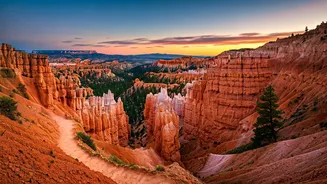
Bryce Canyon National Park in Utah is a testament to the relentless power of water, which over millennia has sculpted a spectacular natural amphitheater.
This park is renowned globally for housing the most extensive collection of hoodoos, also known as rock spires, found anywhere on Earth, adorning the 12-mile Paunsaugunt Plateau. These distinctive formations derive their striking hues – vivid reds, oranges, and whites – from iron and manganese minerals embedded within them. Unlike its neighbor, Zion National Park, Bryce Canyon boasts a cooler climate and a more compact layout, making its geological wonders exceptionally accessible for visitors eager to experience hiking, breathtaking scenic drives, unparalleled stargazing, and horseback riding adventures amidst its vividly colored rock sculptures.
Timing Your Visit
Bryce Canyon is a destination that beckons year-round, with its facilities fully operational from May through October. For those seeking pleasant weather and fewer fellow explorers, the late spring and early fall seasons are ideal. During September and October, the park offers typically clear skies and less crowded trails, making it perfect for hiking. Summer, while vibrant with ranger programs and events like the Bryce Canyon County Rodeo, can be less enjoyable due to heat, afternoon thunderstorms, and a surge in visitor numbers. Winter transforms the landscape into a snowy wonderland, though some trails may close, and fewer services, including the park shuttle and Sunset Campground, are available. However, for photographers, a light winter dusting can accentuate the hoodoos' colors, and ranger-led snowshoe hikes offer a unique way to experience the park.
Prime Viewpoints Unveiled
The Bryce Canyon Amphitheater itself, a colossal horseshoe-shaped geological basin, offers captivating vistas from any vantage point along its rim. However, the park highlights four primary lookout areas: Sunrise Point, Sunset Point, Inspiration Point, and Bryce Point. For a single, all-encompassing viewpoint, Sunrise Point is highly recommended. Despite its name, this northernmost spot provides excellent lighting conditions throughout the day and offers stunning views of formations such as Boat Mesa, the Sinking Ship, and the Pink Cliffs. For visitors staying at the historic Bryce Canyon Lodge, the mostly flat Rim Trail provides a leisurely 10-minute walk directly to Sunrise Point, making it easily accessible.
Exploring Bryce's Trails
Bryce Canyon presents over 30 hiking trails catering to all levels of physical ability and experience. For newcomers, the Rim Trail is an excellent starting point; this 5.5-mile (8.0 km) path extends from Bryce Point to Fairyland Point, with convenient stops at Inspiration Point and Sunset Point along the way. It's largely a flat, pet-friendly route. To immerse yourself more deeply within the maze of hoodoos, the Navajo Loop Trail is a must-try at just 1.3 miles (2.1 km). This popular trail can be combined with others, such as the Queen’s/Navajo Combination Loop (2.9 miles/4.6 km) or the Navajo/Peekaboo Combination Loop (4.9 miles/7.9 km), which afford spectacular views of iconic formations like Thor’s Hammer. For families, the "Wall Street" section of the Navajo Loop Trail (1.5 miles/2.4 km) showcases impressive sights like the Wall of Windows and Silent City. Children can also engage with the Junior Ranger program, obtaining booklets at the visitor center to earn a wooden badge.
Wildlife and Celestial Wonders
Bryce Canyon is not only a visual feast of rock formations but also a habitat for diverse wildlife and a sanctuary for stargazers. Sunrise and Sunset Points are prime locations for spotting the park's fauna. Patience and quiet observation along the rim or at these viewpoints increase the chances of seeing animals such as pronghorn antelope, Rocky Mountain elk, and mule deer, most commonly found in the Amphitheater and adjacent meadows. While black bears and mountain lions are present, prairie dogs are a more frequent sight. Birdwatchers will find the park teeming with life, with 173 species recorded, including migratory hummingbirds in the fall. The Bristlecone Loop Trail (1.0 mile/1.6 km) is known for sightings of dusky grouse and Clark’s nutcrackers. Bryce Canyon's designation as an International Dark Sky Park in 2019 makes it a premier destination for astronomy. The minimal light pollution and high elevation offer unparalleled views of the Milky Way and Andromeda Galaxy, especially during a new moon. The park actively promotes stargazing through events like an astronomy festival and guided full-moon hikes.
Experiencing the Park
Beyond hiking, the 18-mile Bryce Canyon Scenic Drive offers a continuous journey through the park's stunning landscapes, culminating at Rainbow Point. A convenient park shuttle service operates along this route, making it accessible to all. For a unique perspective, consider a horseback riding tour, with options available from May through October, traversing over four miles of designated trails. Even outside the park boundaries, adventure awaits. The Mossy Cave Trail (0.8 mile/1.3 km), located on Highway 12, leads to a picturesque grotto and a 50-foot waterfall. For thrill-seekers, ATV rides are available in the nearby Dixie National Forest, exploring areas like Casto Canyon, renowned for its own red rock formations, though ATVs are prohibited within the national park itself. Families can also participate in the Junior Ranger program, an engaging way for children to learn about the park's natural and cultural history.
Accommodations and Accessibility
Bryce Canyon offers various lodging options to suit different preferences and budgets. Within the park, the historic Bryce Canyon Lodge provides a convenient stay just an eight-minute walk from the Amphitheater, complete with dining facilities. For those seeking alternative accommodations, Bryce Canyon City, adjacent to the park entrance, features a range of hotels. Camping is another popular choice, with two campgrounds available: North Campground and Sunset Campground. Both are well-situated, offering proximity to the visitor center, lodge, and Amphitheater, and both accommodate RVs. North Campground operates year-round, while Sunset Campground is open from April through October. The park is also committed to accessibility; its shuttle buses are wheelchair-accessible, and the visitor center features ramps and a lowered information desk. Most viewpoints along the scenic drive are accessible, with paved paths leading to popular overlooks like Sunset Point and Bryce Point. The Rim Trail is paved for a half-mile stretch between Sunset and Sunrise Points, offering a wheelchair-friendly route. Additionally, two campsites in Sunset Campground are equipped with paved sites and stand-up fire grills for guests with mobility considerations.