





The Art of the Stride
The way we move ourselves through space communicates volumes about our inner state and our perception of the world. For those on the fashion runway, this
is amplified; a single misplaced step can shatter an entire presentation. Renowned coach Mandy Lieveld specializes in refining this fundamental aspect of presence. She works with individuals, from seasoned models to those new to the spotlight, to cultivate a commanding and assured manner of walking. Her expertise transforms hesitant, awkward movements into deliberate, powerful strides, suitable for high-profile events for brands like Michael Kors and Versace. Lieveld's approach focuses on instilling a sense of purpose and control in every step, making the walk a statement of confidence and poise, rather than a mere means of transit. This meticulous attention to gait is crucial in an industry where visual impact is paramount.
Overcoming Gait Quirks
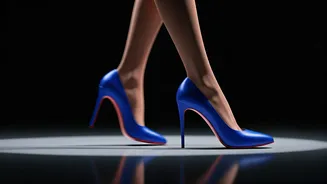
Many individuals, even those slated for significant public appearances, grapple with unique walking patterns that can undermine their confidence. This was the case for Zoe Dubno, who was invited to participate in a prominent fashion show but felt apprehensive about her own distinctive gait, which she described as resembling a comedian's walk. The challenge was compounded by the necessity of wearing high heels, a prospect she found daunting. Fortunately, the casting team brought in Mandy Lieveld to provide instruction. After just two days of dedicated coaching, Lieveld was able to guide Dubno from her initial, less-than-graceful movement to a walk that exuded the elegance and flow expected of a supermodel. This transformation highlights the effectiveness of expert coaching in refining one's natural movement and adapting it to specific requirements.
Personalized Coaching Insights
Seeking to understand the transformative power of this coaching firsthand, I arranged a private 90-minute session with Mandy Lieveld. My own self-diagnosed tendency to slouch, coupled with a perceived awkwardness when wearing heels, made me a prime candidate for her expertise. The session took place in a well-lit, mirrored studio in Midtown Manhattan, a space often frequented by aspiring performers. Lieveld began by instructing me to broaden my posture, imagining my chest radiating warmth and openness. She repeatedly emphasized the importance of relaxation, adjusting my shoulders to alleviate tension. Her core philosophy revolves around 'CNS' qualities—Confident, Natural, and Strong—which she asserts are highly valued by industry professionals. This personalized approach aimed to address my specific concerns and build a foundation for a more assured and impactful walk.
The Coach's Journey
Mandy Lieveld's path to becoming a sought-after walking coach is rooted in her extensive background and personal experiences. Originally from the Netherlands and standing at an impressive 6-foot-1, she was naturally inclined towards modeling. However, she observed a gap in formal training for models regarding how to effectively present themselves. This realization planted the seed for her future career. Her passion for movement was further developed through dance, where she studied ballet and modern jazz, gaining a deep understanding of poise and physical expression. A significant turning point came at age 21 when she was diagnosed with myasthenia gravis, a condition that impacted her muscles. This health challenge reinforced her belief in pursuing fulfilling activities. She then pursued higher education, earning degrees in psychology, which she found highly relevant to the confidence and resilience required in the modeling world, particularly when dealing with frequent rejections. This unique blend of dance, personal health struggles, and psychological insight informs her empathetic and effective coaching methods.
Psychology of Movement
The act of walking carries profound psychological and even evolutionary implications. According to clinical psychologist Nicole Maleh, slouching can be a conscious or unconscious attempt to withdraw or avoid attention, a way of saying 'I don't want to be noticed.' Conversely, confident posture and gait can signal presence and self-assurance. Drawing parallels to primate behavior, Maleh explains that dominant individuals exhibit a more assertive and controlled stride, whereas others might display more erratic movements. However, the modern human experience introduces unique challenges, such as navigating formal settings or runways in footwear that may not be conducive to comfort. Lieveld's coaching addresses these complexities, providing practical strategies to overcome physical discomfort and enhance confidence, ensuring that one's walk projects strength and self-possession regardless of the situation.
Techniques for Poise
Mandy Lieveld employs a variety of creative and effective techniques to refine a person's walk, making it both stylish and stable. One memorable mnemonic involves imagining each step as a 'splash,' akin to stepping in a puddle, which encourages a softer, more energetic footfall rather than a harsh 'stomp.' She emphasizes the crucial role of the 'core' as the 'engine' of one's walk, advising clients to engage and stabilize this area, especially when wearing heels, to achieve a more secure feeling without hindering breathing or speech. To improve posture, she sometimes uses an umbrella placed behind the back and between the arms, a method that naturally opens the chest and provides a gentle stretch for the lower back, promoting an upright stance. For facial expression, she guides models to project a piercing gaze, like 'laser beams' emanating from the eyes, conveying a sense of knowing and inner strength.
From Slouch to Stomp
The culmination of Lieveld's coaching is often demonstrated through 'before and after' video recordings, which vividly illustrate the transformation in a client's posture and gait. In my own session, the chronic slouch that had plagued my spine was visibly corrected. My movement evolved into an erect, purposeful stride, exuding a confident, almost supermodel-like energy, even while wearing heels. The sense of having a deliberate direction and presence was palpable. While the immediate focus is on achieving a flawless walk, the inevitable question of what to do in case of a stumble arises. Lieveld's advice is grounded in resilience: the most important step after any misstep is simply to 'get up and get yourself out there again,' embodying the unwavering confidence that her coaching aims to instill.