






Homecoming and Repairs
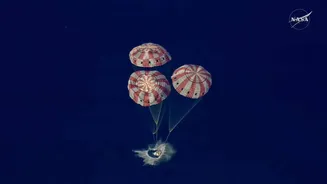
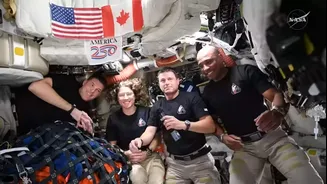
The Artemis II mission achieved a triumphant return to Earth this past weekend, with its four-person crew safely splashing down in the Pacific Ocean off
the coast of San Diego, California. Despite facing unexpected hurdles, including a problematic helium valve and a non-operational toilet, the astronauts adeptly managed in-transit repairs, ensuring their secure journey back home. This successful completion underscores the resilience and capability of the mission's technology and crew, paving the way for more complex scientific investigations in the future.
Lunar Orbit and Beyond
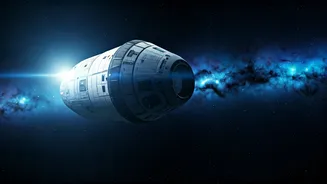
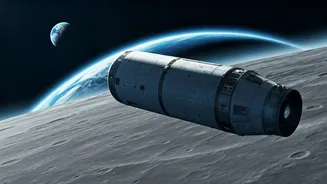
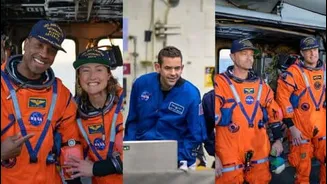
The Artemis II mission, which featured a diverse crew of three NASA astronauts and one Canadian astronaut, embarked on its journey atop an SLS rocket within the Orion capsule on April 1. Their mission involved transiting around the Moon and returning to Earth, setting a new record for the farthest distance humans have traveled from our planet. Crucially, this extended voyage validated the functionality of Orion's life-support systems over prolonged durations, proving their reliability for future deep-space expeditions and bringing humanity closer to the long-anticipated goal of landing on the lunar surface.
Future Lunar Landings
While Artemis III was originally slated to be the mission that would land humans on the Moon, current developments have introduced a temporary pause. Delays with the Starship program and uncertainties regarding NASA's choice of launch provider have necessitated a revised timeline. Artemis III is now tentatively scheduled for 2027, and its primary objective will be to test a lunar lander in Earth orbit. This lander could be the Starship Human Landing System or a modified Blue Origin craft, with the SLS rocket anticipated to be the launch vehicle, given its current unmatched capabilities for such a payload. The precise lander and launch configuration are yet to be finalized, adding an element of anticipation to future missions.
Orbital Trials Ahead
In the coming year, one or both of the potential lunar landers are slated for deployment into orbit. These landers will undergo rigorous docking and undocking trials with the Orion spacecraft. The success of these orbital maneuvers is a prerequisite for proceeding with subsequent missions. If these tests are successful and a rocket, such as Starship, can demonstrate its efficacy in transporting the lander to the Moon—which for Starship specifically involves proving its orbital refueling capabilities—then Artemis IV is planned for launch around 2028. This mission aims to return astronauts to the lunar surface for the first time since the Apollo era.
Geopolitical Race
The ambitious timeline for lunar exploration is partly influenced by a strategic desire to achieve a crewed Moon landing before China. Chinese taikonauts are not expected to attempt a crewed lunar landing until around 2030. This temporal advantage provides NASA with some flexibility in its Artemis schedule. If necessary, the agency could potentially delay the Artemis IV mission by as much as a year, though this would naturally impact the subsequent Artemis V mission.
Building a Lunar Base
Artemis V, tentatively scheduled for 2030, represents a significant leap forward, marking the beginning of what many consider the next generation of space travel and colonization. This mission is envisioned as the commencement of constructing a permanent lunar outpost. This outpost would include essential living quarters, a localized communication network, and potentially a lunar nuclear reactor to power operations. The successful establishment of such a base signifies a crucial step towards sustained human presence beyond Earth.
Technological Hurdles
The path to lunar colonization involves a substantial amount of preparatory work and the successful validation of numerous cutting-edge technologies. Before these systems can be integrated into operational use for extended lunar missions, they must undergo rigorous testing and prove their reliability. Nevertheless, the prospect of the coming years is exceptionally promising for enthusiasts of rocketry and space exploration, offering a continuous stream of exciting developments and potential breakthroughs.
Ready for Stars
The remarkable success and public engagement surrounding the Artemis II mission serve as a clear indicator that humanity is profoundly ready to venture further into the cosmos. The mission's ability to capture the public's imagination demonstrates a collective aspiration to explore beyond our current horizons and embrace the challenges and opportunities that lie in interstellar endeavors.