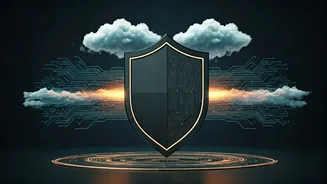

Gates's Dire Prediction
Bill Gates recently expressed concerns regarding the imminent potential of a 'Dark Age' that could envelop the globe within the coming five-year period.
This dire warning stems from his observations of the rapidly evolving technological landscape and the ways in which these advancements might be misused or mismanaged. He is focused on the potential repercussions of technology, advocating for careful deliberation regarding its development and deployment. His perspective serves as a call for international collaboration, emphasizing the need for coordinated approaches to address the challenges ahead, and also for ethical guidelines within the technology sector to prevent negative outcomes. This emphasizes the need for thoughtful stewardship of technology's evolution and its impact on the world, a future threatened by issues like misinformation and cybersecurity threats.
Tech's Double-Edged Sword
The remarkable advancements in technology, while promising progress and solutions to pressing global problems, also present substantial risks. The very tools designed to connect and empower can be readily manipulated. The spread of misinformation, the erosion of privacy, and the potential for cyber warfare are all looming threats that could be amplified if not properly handled. Gates’s concerns touch upon the dual nature of innovation, where progress can inadvertently lead to challenges that must be addressed swiftly. The use of Artificial Intelligence (AI) and its potential misuse are also factors contributing to the concerns. This perspective underscores the vital need for a more comprehensive and forward-thinking strategy regarding tech development and policy. This strategy must ensure that innovation benefits society, not only in terms of productivity and efficiency but also by guaranteeing the integrity of crucial societal systems.
Misinformation's Impact
One of the key elements fueling Gates’s worries is the unchecked propagation of misinformation. The ease with which false or misleading narratives can spread through digital channels is a significant problem. These distorted facts can erode trust in established institutions and sow division within societies. Gates's warning draws attention to the vulnerability of democratic processes and global stability. Countering misinformation demands robust strategies, including media literacy campaigns and the deployment of fact-checking initiatives. Such actions would help strengthen public understanding, and foster more responsible digital citizenship. The core challenge lies in balancing the freedom of expression with the crucial need for truth and accuracy. This involves a collaborative effort among governments, tech companies, and civil society groups.
Cybersecurity Threats
The looming specter of cyberattacks also contributes to the gravity of Gates’s warning. The increasing reliance on digital infrastructure makes systems vulnerable to disruptions. Attacks on critical infrastructure, such as energy grids, financial systems, and communication networks, could have devastating consequences, potentially triggering widespread chaos and economic collapse. Securing cyber defenses is an essential task, requiring both technological and policy-driven approaches. Building robust cybersecurity requires a multifaceted approach, involving international cooperation, and investment in skilled personnel and the development of state-of-the-art defensive technologies. Furthermore, it is necessary to establish clear legal frameworks to deter malicious actors and hold them accountable for their actions. Prioritizing cybersecurity represents a critical step in safeguarding the future from potential disruptions.
Global Cooperation Required
To avert the 'Dark Age' that Gates foresees, international cooperation is essential. The complex challenges posed by technological advancements, misinformation, and cyber threats extend beyond any one nation’s borders. Collaborative efforts are necessary to develop and implement global standards and regulations, share best practices, and coordinate responses to emerging threats. This approach includes fostering open dialogue and collaboration among governments, tech companies, and civil society groups. Establishing a global framework for the ethical development and deployment of technology is vital, ensuring that advancements align with universal values. The need for a coordinated strategy emphasizes the interconnectedness of our world and the need for a shared vision of a safer, more sustainable, and technologically advanced future for all.
The Road Ahead
The warnings provided by Bill Gates about the impending potential 'Dark Age' serve as a catalyst for critical examination and action. The need to thoughtfully assess the possible implications of technological advances and to proactively address potential dangers is extremely important. The pathway to a safer future involves promoting ethical tech development, protecting against misinformation, and securing cyber domains. It requires all stakeholders — governments, tech companies, individuals, and international organizations — to work together. By recognizing these challenges, we can strengthen our capacity to innovate and ensure that technology is used for good, creating a future that is resilient, prosperous, and secure for generations. A commitment to transparency, accountability, and the shared ideals of a global community will determine how technology shapes the future.