






Kew Gardens' Tropical Escape
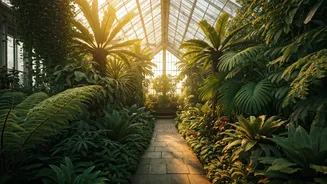
When the weather outside is frightful, London's Royal Botanic Gardens, Kew, offers a delightful retreat. The iconic 1848 Palm House acts as a verdant embrace,
enveloping visitors in a multisensory experience with its dense foliage, balmy atmosphere, and gentle misting sounds. A captivating walkway elevated to the tree canopy provides unique perspectives, allowing the mind to wander beyond the ordinary. Beyond this, the Princess of Wales Conservatory dazzles with its annual orchid festivals, while the vast Temperate House, a marvel of Victorian glasshouse architecture, hosts wellness activities like yoga. Kew’s dedication to well-being is further showcased through its 'Wellbeing in Nature' series, featuring practices like Pilates and sound bathing, making it a premier destination for mental rejuvenation.
Longwood Gardens' Tranquil Havens
Located just west of Philadelphia, Longwood Gardens spans over a thousand acres, presenting a breathtaking floral spectacle. During the colder months, its numerous indoor gardens offer a peaceful sanctuary. The soothing sounds of flowing water throughout the conservatories, as highlighted by continuation education manager Emerson Marine, create a deeply calming ambiance. Vibrant displays, from the meticulously restored Orchid House showcasing a kaleidoscope of colors to the Acacia Passage blooming with bright yellow puffs, are both energizing and inspiring. Even the architecture contributes to the wellness experience, with fern-adorned bathroom walls adding a touch of natural beauty. Longwood actively promotes well-being through indoor programs focusing on happiness, forest therapy, and herbal medicine.
Tokyo's Urban Oasis
Amidst the bustling energy of Tokyo, the Shinjuku Gyoen National Garden provides a much-needed calm escape. While popular for spring cherry blossoms, its expansive modern greenhouse is a significant draw during cooler periods. Graceful walkways wind through a vibrant tropical environment, featuring towering palms, delicate orchids, and a variety of ferns and cacti. A tranquil pond, complete with water lilies and a gentle waterfall, enhances the serene atmosphere. The greenhouse also plays a crucial role in conservation, protecting endangered plant species from regions like Okinawa and the Ogasawara Islands. Concluding a visit with a restorative cup of antioxidant-rich matcha tea in the garden’s tearoom offers a perfect blend of cultural and natural well-being.
Chicago's Conservatory Wonders
On Chicago's West Side, the Garfield Park Conservatory, one of North America's largest indoor botanical spaces, aims to profoundly impact lives through nature's power. Its distinctive, rounded structures, designed to resemble Midwest haystacks, transport visitors through diverse climates. The warm Palm House boasts over 70 varieties of palm trees, while the Fern Room evokes prehistoric Illinois with ancient cycads and the gentle murmur of a waterfall. The Desert House showcases a fascinating array of cacti and succulents in myriad forms. An exhibit delves into photosynthesis, the fundamental process of life, inviting contemplation. Visitors can reflect on nature’s marvels at bistro tables in Horticulture Hall, which also hosts monthly yoga classes, further enhancing the sanctuary's restorative qualities.
Edmonton's Pyramidal Biomes
Nestled along a river bend in Edmonton, Alberta, the Muttart Conservatory presents an architectural marvel with its four glass pyramids, each housing a distinct ecological zone. The tropical pyramid immerses visitors in a humid environment with palms, banana trees, and a cascading waterfall feeding a central pool. The temperate biome bursts with color from winter-blooming flowers like hellebores and camellias. The remaining two pyramids feature desert flora and rotating special exhibits. The aromatic experience within these biomes shifts frequently, with citrus-scented blossoms being a particular favorite, according to acting attractions program manager Megan Gergatz-McMorran. Evening visits offer a magical experience with illuminated plants and views of the starry sky through the glass, complemented by wellness activities such as sound bathing and yoga.
Copenhagen's Victorian Palm House
Within the extensive Botanical Garden of Copenhagen, the most prominent feature is its grand Victorian Palm House, a remarkable 10,000-square-foot conservatory. This architectural gem, dating back to 1874, replicates a rainforest climate, featuring species like Colombian coca shrubs, clove trees, begonias, and banyan figs. Visitors can ascend a cast-iron spiral staircase for elevated views, providing a unique perspective of the lush interior. The wings of the Palm House explore diverse environments, from humid mangroves to drier Mediterranean landscapes. A special highlight is the Butterfly House, where colorful insects flutter amidst the flowers, creating a captivating and delicate spectacle that enchants visitors.
Washington D.C.'s Living History
The U.S. Botanic Garden in Washington, D.C., a testament to an idea first championed by George Washington, stands as the nation's oldest continuously operating public garden. Situated on the National Mall, it offers a vital antidote to the stresses of city life and political discourse. The conservatory comprises ten distinct garden rooms, including a tropical forest with an elevated canopy walkway. It houses flora native to Hawaii, a collection of medicinal plants, and an impressive array of 3,000 orchids, renowned for their diverse scents, forms, and colors. A significant attraction is the Amorphophallus titanum, or corpse flower, which, despite its name, elicits immense awe when it blooms, a rare event occurring only every few years for a few days.
St. Louis' Geodesic Dome
Missouri Botanical Garden's Climatron is a striking feature, a pioneering geodesic dome conservatory that opened in 1960. Maintaining an 85-degree Fahrenheit temperature and 85 percent humidity, it meticulously recreates a tropical rainforest environment, complete with cascading waterfalls and abundant foliage. Liz Byrde, therapeutic horticulture coordinator, notes that the human eye can perceive more shades of green than any other color, and green itself is associated with relaxation, making the garden a mindful experience. The varied plant life, from delicate small specimens to large, spiky ones, fosters a sense of wonder. The garden also offers therapeutic horticulture classes on topics like herbal teas and flower arranging, alongside its annual winter orchid show.
Singapore's Futuristic Domes
Embracing its identity as a 'garden city' with a growing focus on mental health tourism, Singapore boasts the impressive Gardens by the Bay. Its two futuristic conservatories, designed to maintain cool temperatures of 73-77 degrees Fahrenheit, offer respite from the tropical heat. The Flower Dome, the world's largest glass greenhouse at three acres, showcases fields of blooms, ancient olive trees, and baobab trees, alongside diverse plant collections from around the globe. Adjacent, the Cloud Forest simulates a tropical mountain region, featuring a 138-foot-tall peak adorned with ferns, mosses, and orchids. Visitors ascend via elevator to the summit and descend along a path that engages the senses with waterfall sounds, mist, and floral aromas.